


Could a smoother cup come from changing how you brew, rather than searching for a special “low-acid” coffee? If your coffee tastes sharp, sour, or harsh, advice about beans, grind size, and brewing methods can be hard to sort through. Learning how to make coffee less acidic starts with a practical approach: change one brewing detail at a time and taste the difference. This can soften a cup without making it weak or masking the flavors you enjoy.
It also helps to separate coffee’s bright, tangy flavor from its chemical acidity and from how it affects your body. These ideas are related, but they are not interchangeable. A cup that tastes pleasantly bright may not trigger discomfort, and flavor alone cannot predict how your body will respond.
Below, you’ll find ways to adjust roast choice, grind, brew time, and serving style, including when cold brew may suit your taste. You’ll also get a simple method for testing one change at a time, so you can find a smoother, more balanced cup that still tastes like coffee you enjoy.
Key Takeaways
- Bright, fruity flavor is a taste quality, not automatically a sign of poor coffee or a problem with its pH.
- Adjust grind size, water temperature, contact time, and coffee-to-water ratio to influence extraction and balance.
- Compare cold brew, immersion, pour-over, and drip to find a method that suits your preferred flavor and routine.
- To make coffee taste less acidic, keep your recipe steady and change one brewing variable at a time.
- Choose the flavor you enjoy and repeat the recipe that works. A smoother-tasting cup does not guarantee relief from physical symptoms.
Why Does Coffee Taste Acidic, Sour, or Sharp?
A cup can taste lively and tart without being unpleasant. In coffee tasting, acidity describes a bright, crisp impression, like citrus, green apple, or berries. It is one part of flavor, alongside sweetness, bitterness, and body. That brightness can make a cup feel vivid rather than flat, and fruity notes are not automatically a flaw or a sign of poor-quality beans.
“Acidity” also has a chemical meaning. Coffee contains naturally occurring acids, and pH describes how acidic a liquid is chemically. A pH reading is not a tasting note: perceived brightness depends on the coffee’s mix of compounds and how brewing brings them forward. The overview of the chemistry of coffee and acidity offers additional context on the drink’s composition and flavor.
Perceived coffee acidity is the bright, tart sensation a cup creates on the palate, not a direct reading of its pH. Keeping these meanings separate helps you describe what is in your cup more precisely. A sharp taste does not, on its own, reveal the coffee’s pH or predict how your body will respond to it.
What does acidity mean in a cup of coffee?
Think of the clean tang of lemon, the gentle tartness of a green apple, or the berry-like lift in some fruit. These comparisons describe flavor sensations, not a chemical test. One person may find that liveliness refreshing; another may prefer a rounder, softer taste. Neither preference determines whether the coffee is good.
Beans and brewing shape which flavors stand out, so the same broad impression can show up differently from cup to cup. Flavor and pH are related through coffee’s chemistry, but they are not interchangeable labels. A smoother flavor also does not guarantee a particular physical effect.
Is sour coffee always caused by acidity?
No. If a cup tastes sharply sour, thin, or unfinished, under-extraction may be part of the problem. The brewing process may not have drawn out enough of the coffee’s flavor to balance its brighter notes. That is a taste clue, not proof that the beans are inherently too acidic. Bitterness feels different, often lingering as a dry, harsh, or burnt edge.
Describe the cup before changing your recipe. Does it remind you of tart fruit, or does it leave a bitter aftertaste? Those sensations suggest different adjustments. Changing several things at once makes it harder to tell which one helped.
- Sour or thin: consider whether the coffee tastes underdeveloped or lacks balance.
- Bitter or dry: note the lingering harshness rather than treating it as sourness.
To make coffee less acidic in taste, start with one variable, such as grind size or brewing time, and leave the rest of the recipe steady. Taste the next cup, then decide whether the change helped. A repeatable comparison makes it easier to assess the brew before blaming the beans.
How Coffee Beans and Brewing Create a Smoother-Tasting Cup
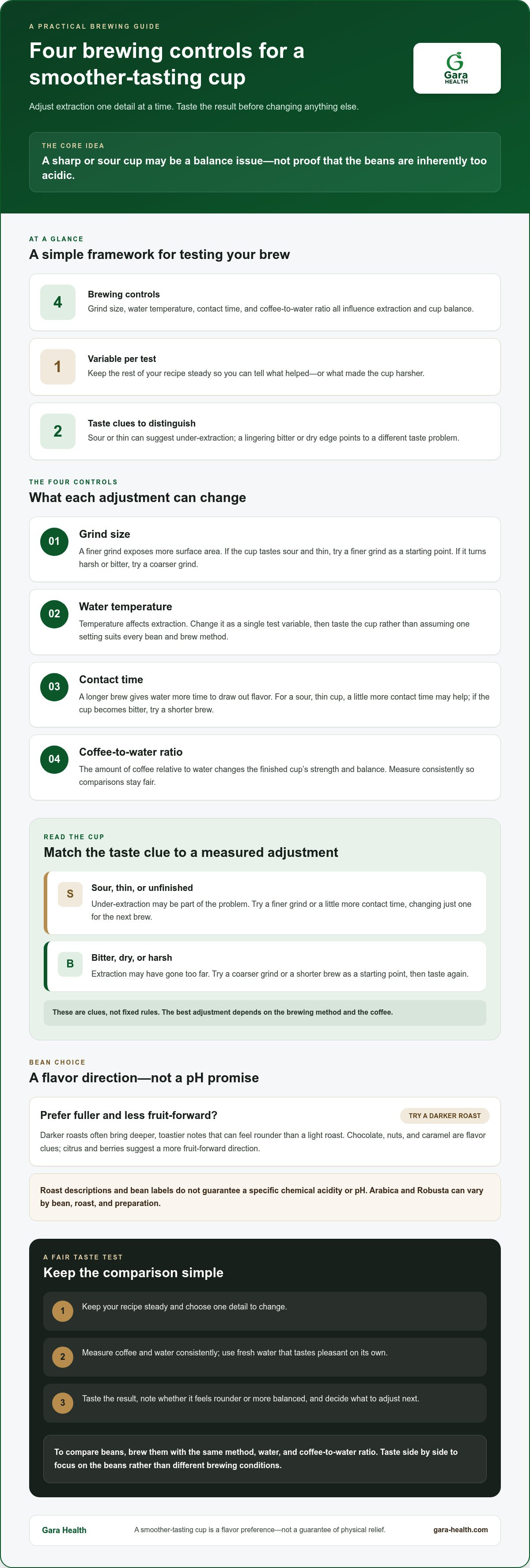
A balanced cup depends on how the beans and brewing choices work together. The coffee brings its own flavor profile, while grind size, water temperature, contact time, and the amount of coffee relative to water influence what ends up in your mug. To shape coffee flavor, adjust grind size, water temperature, contact time, or the coffee-to-water ratio, changing one variable at a time.
These variables affect extraction, the process of dissolving flavor compounds from the grounds into water. A finer grind exposes more surface area, while a longer brew gives water more time to draw out flavor. Temperature also affects extraction, and changing the coffee-to-water ratio changes the strength and balance of the finished cup. No single setting suits every bean and brewing method, so taste the result rather than treating one recipe as a universal rule.
Which coffee beans tend to taste less bright?
If you prefer a fuller, less fruit-forward cup, try a darker roast. Roasting changes the beans’ flavor, often bringing deeper, toastier notes that can feel rounder than the lively character of a light roast. That describes a flavor preference, not a guarantee of a specific chemical acidity or pH.
Flavor notes on a bag can help you decide what to try. Descriptions such as chocolate, nuts, or caramel suggest a different flavor direction from citrus or berries, but they are tasting clues, not promises of measured acidity. Arabica and Robusta also vary by bean, roast, and preparation. Neither label alone guarantees a smoother or sharper cup.
For a useful comparison, brew two coffees using the same method, water, and coffee-to-water ratio. Taste them side by side and notice whether one feels rounder, sweeter, or more fruit-forward. Holding the recipe steady helps you assess the beans instead of accidentally comparing different brewing conditions.
How extraction changes coffee’s sourness and bitterness
If a brew tastes sour and thin, it may be under-extracted. A finer grind or a little more contact time can encourage greater extraction, though the best adjustment depends on the brewing method. If the cup turns harsh or bitter, extraction may have gone too far. A coarser grind or shorter brew could move it toward a more balanced taste. Treat these as starting points, not fixed rules.
Water and measurement matter, too. Use fresh water that tastes pleasant on its own, and measure the coffee and water consistently so each test gives you a fair comparison. If you change grind size, keep the ratio and other settings the same for that brew. Then taste before deciding what to adjust next.
This steady approach is a practical way to explore how to make coffee less acidic in flavor without assuming the roast or bean label tells the whole story. For a functional coffee option, Gara Shilajit Coffee Powder can be part of your routine. Your brewing adjustments remain the way to shape the taste of the cup.
Which Brewing Method Makes Coffee Taste Less Acidic?
No single brewing method makes every coffee taste smooth. Cold brew often comes across as mellow, while hot methods can bring out a brighter, more aromatic cup. The balance you prefer depends on the beans, recipe, and how you like to drink coffee. A smoother taste does not mean a method has removed all acids or will suit everyone’s palate.
Use this comparison to choose a starting point, then adjust one detail at a time. The “first variable to test” is a practical suggestion, not a rule.
Method
Typical taste and effort
Try adjusting first
Cold brew
Often mellow and rounded; needs advance preparation.
Steep time or dilution
Immersion
Full-bodied and even; grounds steep together in water.
Contact time
Pour-over
Clean and expressive; pouring takes attention.
Pouring pace or grind
Drip
Convenient and consistent; flavor depends on the machine and recipe.
Grind size or coffee-to-water ratio
Does cold brew taste less acidic than hot coffee?
Some people find cold brew less sharp or more rounded than hot coffee. Cold water extracts flavor differently and may draw out fewer acidic compounds, but a softer impression does not prove a particular pH or promise a bodily effect. Cold brew also takes planning: grounds steep in cold water for an extended period, commonly 12 to 24 hours. The result may be concentrated, so add water or milk to reach a strength you enjoy.
Can brew style change flavor without changing the beans?
Yes. With immersion, grounds stay in contact with water, often giving the cup a fuller feel. Pour-over lets you control how water passes through the grounds, which can create a cleaner, more distinct flavor. Drip offers a hands-off routine, though the machine and grind still shape the result. Even with the same beans, these differences can shift how bright, rich, or balanced the coffee tastes.
Serving choices can soften intensity, too. Stir in hot water to dilute a strong cup, or add milk to change its texture and flavor. These adjustments change the drink you taste; they do not establish that the coffee’s acids have been removed. To find what you prefer, keep the beans and brewing recipe steady while testing one serving change.
To explore how to make coffee less acidic in flavor, match the method to the cup you want: try cold brew for a mellow profile, immersion for body, or pour-over for clarity. If you enjoy functional coffee options alongside your usual brewing routine, Gara Health Mushroom Coffee is another product to explore. No particular acidity profile is implied.
How to Make Coffee Less Acidic: A Step-by-Step Brewing Test
A repeatable test turns a frustrating cup into useful feedback. Keep your usual beans and brewing method at first, then change just one part of the recipe. This makes it easier to tell whether a finer grind, a longer brew, or a serving adjustment actually makes the flavor more balanced.
- Write down your starting recipe. Record the coffee dose, water amount, grind size, brewing method, and brew time. Describe the taste in simple terms, such as sour, thin, balanced, or bitter.
- Brew the same recipe again before changing anything. This gives you a baseline and helps rule out an inconsistent scoop, pour, or steep as the reason one cup tastes different from another.
- If it’s distinctly sour or thin, adjust the grind slightly. Try a somewhat finer grind while keeping the other settings the same. Avoid a large jump, since a dramatic change can take the brew in the opposite direction.
- Taste and record the result. Compare it with your baseline. If the cup tastes more balanced, keep that setting. If it turns harsh or bitter, move the grind back toward its original setting.
- Test brew time next if the sharpness remains. Change the contact time without changing the grind or coffee-to-water ratio. After these tests, compare a different roast or brewing method if you still want a change.
A simple recipe-adjustment sequence for a sour cup
Think of each brew as a small experiment. Use the same coffee and water, make one modest adjustment, then taste before choosing the next step. If grind and brew time do not bring the cup into balance, a different roast or method may better match your preference. Changing several things together makes it difficult to know what helped.
Troubleshooting rule: If the cup is sour and thin, test a slightly finer grind or longer brew. If it becomes harsh or bitter, reverse the last adjustment.
Serving adjustments for a gentler flavor
Once you’re happy with the brew itself, try changing how you serve it. A little hot water can dilute a strong cup, while milk can soften its intensity and change its texture. Add a small amount, taste, and note whether the coffee still has the flavor you enjoy or whether the addition masks it.
These serving choices alter the drink in your cup; they do not necessarily change the coffee’s underlying chemistry. Keep them separate from brewing tests so you can identify whether the improvement came from extraction or dilution.
That is the practical approach to how to make coffee less acidic in taste: hold the recipe steady, test one adjustment, and follow what your palate tells you. Explore Gara Shilajit Coffee Powder as another functional coffee option for your routine.
Build a Less-Acidic Coffee Routine That Fits Your Taste
A good routine starts with the cup you want, not a rule about which coffee you should drink. Maybe you prefer a rounded, chocolatey flavor, or simply want less sharpness without losing all brightness. Use your tasting notes to choose a recipe, then repeat it consistently. The goal is a dependable cup you enjoy, not a universal definition of “less acidic.”
How to keep your preferred coffee recipe consistent
Measure the coffee and water the same way each time, and jot down the grind, method, brew time, and any adjustment you make. Change only one factor per tasting so you can tell what influenced the flavor. Once you find a balance you like, save the notes as your go-to recipe. Revisit it if you switch beans, grinder, or brewing equipment, since those changes can affect the cup.
- Keep: the recipe that tastes balanced to you.
- Record: each adjustment and whether it improved the cup.
- Retest: when your coffee or equipment changes.
This simple record makes how to make coffee less acidic a personal, repeatable process rather than a string of contradictory tips. It gives you a clear starting point the next time a cup tastes sharper than expected.
When coffee flavor advice is not enough
A sharp or sour taste describes the drink. Recurring discomfort after coffee is a separate experience, and changing grind size or brew style cannot promise to relieve physical symptoms. A cup’s flavor alone also cannot tell you what is causing discomfort. Do not try to diagnose reflux, gastritis, or another condition from a tasting note or online search.
If symptoms after drinking coffee are persistent, severe, or worrying, discuss them with a qualified healthcare professional. They can consider your individual situation and offer appropriate guidance. Brewing advice is for shaping flavor, not a substitute for medical care.
Keep your routine flexible but grounded: start with a flavor you enjoy, make small adjustments, and save the recipe that works for your palate. Gara Health offers Gara Shilajit Coffee Powder and Gara Health Mushroom Coffee. Consider them as options for your coffee routine, not as low-acid choices or solutions for digestive concerns.
Make Your Next Cup a Small Upgrade
Your ideal cup does not have to match anyone else’s idea of “smooth.” Let your own taste set the direction, and give yourself room to refine your routine as your preferences change. The most useful answer to how to make coffee less acidic is the one that brings you closer to a cup you look forward to drinking.
Keep curiosity in the process. A new bean or brew style is a chance to notice something different, not a reason to chase a perfect formula. Make choices based on flavor, and remember that taste adjustments cannot promise a change in how your body responds. If discomfort persists or concerns you, seek guidance from a qualified healthcare professional.
Ready to bring a fresh option into your coffee ritual? Explore Gara Health’s Shilajit-infused coffee powder and mushroom coffee, then enjoy finding the cup that feels right for your day. Small, thoughtful changes can make your coffee routine feel more your own.
Frequently Asked Questions
How do you make coffee less acidic without changing the beans?
To make the same beans taste softer, adjust the brew rather than replacing them. If the cup tastes harsh or underdeveloped, test a modest grind change and keep the other settings steady. You can also try a different method, such as immersion instead of pour-over. If the coffee is simply too strong, add a splash of hot water and taste again.
Does cold brew have less acid than hot coffee?
Cold brew often tastes smoother or less sharp to some people, and cold-water extraction can draw out fewer acidic compounds than hot brewing. That does not mean every cold brew has less chemical acidity than every hot coffee. The beans, grind, steep, and dilution all shape the result. If you make a concentrate, dilute a small serving first; strength can affect how intense the cup tastes.
Does adding milk make coffee less acidic?
Milk can make coffee taste softer by adding creaminess and tempering sharp or bitter flavors. It does not necessarily remove the acids already in the coffee, so think of it as changing the served drink rather than the brew itself. Start with a small splash, taste, then add more only if you like the balance. If you avoid dairy, a non-dairy option may also change flavor and texture.
Is dark roast coffee less acidic than light roast?
Dark roasts often taste deeper and less fruit-forward, which can make them seem less bright than light roasts. That flavor difference does not guarantee a higher pH or a particular chemical acidity. Roast descriptions are best used as clues about taste, not precise acidity measurements. If you’re comparing roasts, brew them using the same method and proportions so the roast is the main difference you notice.
Can changing the grind size make coffee taste less sour?
Yes, grind size can affect extraction and may help if sourness comes with a thin, underdeveloped taste. Try a modest change rather than jumping from very coarse to very fine, since an overly fine grind can make some brews harsh or bitter. Keep the dose, water, and brew time consistent during the test. If the cup gets worse, return to your original grind and try another adjustment.
What is the least acidic way to brew coffee?
There is not one method that is least acidic for every bean, recipe, and taste preference. Cold brew is a useful option to try if you want a mellower-tasting cup, while immersion, pour-over, or drip may suit you better for other flavor qualities or routines. Compare methods using the same beans, and judge the cup by taste. A smoother impression does not establish the coffee’s pH.
Why does my coffee taste sour even when I use good beans?
Good beans can still produce a sour cup if the brew does not extract enough flavor to balance its brighter notes. A grind that is too coarse for your method, a short brew, or inconsistent pouring may contribute. Natural fruit-like notes can also taste tart without indicating a brewing mistake. Notice whether the cup is pleasantly lively or thin and unfinished, then adjust one recipe detail to see what changes.
Can low-acid coffee prevent heartburn or stomach discomfort?
No coffee label or brewing choice can guarantee prevention of heartburn or stomach discomfort. Flavor acidity and physical response are not the same, and coffee may trigger symptoms for some people. Decaf can also stimulate stomach acid secretion. If discomfort is persistent, severe, or worrying, speak with a qualified healthcare professional rather than relying on a “low-acid” label or making a diagnosis from taste alone.


