


“Non-stimulant focus aid” can mean a prescription ADHD medication or a wellness product. Those aren’t interchangeable, even when search results place them side by side. If you’re comparing non-stimulant focus aids, start by clarifying your goal, then consider the evidence, safety, and professional oversight for each option.
This guide compares non-stimulant ADHD medications with supplements and everyday habits. It explains what each option is intended for, what to consider before trying it, and when to discuss focus concerns with a healthcare professional. A supplement is not a treatment for ADHD.
You’ll also see how wellness products such as shilajit resin and coffee-based options differ. Coffee products may contain caffeine, so review the product label and consider your preferences. The right next step depends on whether you’re seeking clinical care or general wellness support.
Key Takeaways
- “Non-stimulant focus aids” can refer to prescription ADHD treatment or general wellness support, and the two serve different purposes.
- Compare options by intended use, quality of evidence, professional oversight, and potential safety considerations.
- Supplements and functional beverages aren’t substitutes for ADHD care. If attention difficulties persist, discuss them with a healthcare professional.
- Before choosing a wellness product, define your goal and review its label for ingredients, serving guidance, and possible interactions.
- Gara Health offers shilajit resin and coffee products. Compare their formats and consider your caffeine preferences when looking at coffee options.
What Are Non-Stimulant Focus Aids, and What Do They Actually Include?
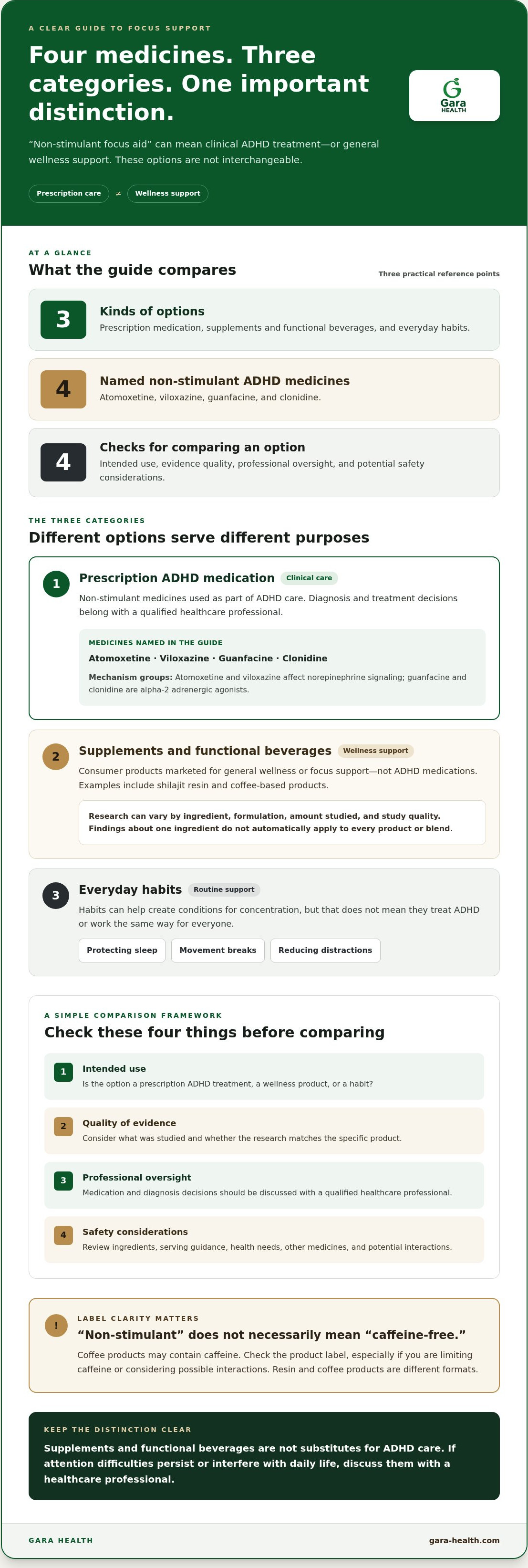
Non-stimulant focus aids is a broad phrase for options people consider to support attention without relying on prescription stimulant medication. It can refer to two distinct categories: prescription treatments for ADHD and consumer wellness products or daily habits people use in pursuit of focus. A shared goal doesn’t mean the options have equal evidence, effects, or safeguards.
A non-stimulant ADHD medication is a prescription treatment selected with a qualified healthcare professional, while non-prescription focus support includes supplements, beverages, and habits that aren’t ADHD medications. Use that distinction when comparing search results: first identify what kind of option you’re looking at, then assess it according to its purpose.
The categories can include:
- Prescription medication: Non-stimulant medicines used as part of clinical ADHD care, such as atomoxetine, viloxazine, guanfacine, or clonidine.
- Supplements and functional beverages: Consumer products marketed for general wellness or focus support, including shilajit resin and coffee-based products.
- Non-medical habits: Routines such as protecting sleep, taking movement breaks, and reducing distractions while working.
Non-stimulant ADHD medication versus non-prescription focus support
Medication decisions depend on a person’s symptoms, health history, and other medicines. Diagnosis and treatment choices belong with a qualified healthcare professional. Clinical resources describe non-stimulant medications for ADHD as part of ADHD management, not as general-purpose supplements. A beverage or supplement may fit a wellness routine, but it is not interchangeable with prescribed treatment or clinical assessment.
This distinction matters when attention problems persist across settings or interfere with daily life. Focus-oriented marketing doesn’t establish that a product treats ADHD, and trying wellness products shouldn’t delay a conversation about ongoing symptoms with a healthcare professional.
Why the word non-stimulant can be confusing
Online, “non-stimulant” may mean “not a prescription stimulant,” or it may be understood as “contains no caffeine.” Those aren’t the same thing. Don’t assume a coffee product is caffeine-free because it appears among non-stimulant focus options. Review the product label for ingredients and caffeine information, especially if you’re limiting caffeine or considering potential interactions.
Clarify your goal before comparing products: are you looking for an ADHD treatment that isn’t a prescription stimulant, or a caffeine-free addition to your routine? The word “non-stimulant” alone won’t answer the second question. A resin product and a coffee-based product are different formats, so comparing their labels and intended use can help you choose without confusing wellness support with medical care.
How Do Non-Stimulant Approaches Support Attention and Focus?
Attention can be affected by sleep, stress, health, environment, and daily routines. A strategy may help create better conditions for concentrating, but that doesn’t mean it treats ADHD or works the same way for everyone. When evaluating an option, separate its intended purpose from any claims about results.
What a focus claim means depends on the product category and the strength of evidence behind it. Prescription medicines are used in clinical care; wellness products and habits have different purposes and evidence. Keeping those distinctions clear helps you compare options without mistaking a general possibility for a proven treatment.
Prescription options work within a clinical treatment plan
FDA-approved non-stimulant ADHD medications include atomoxetine and viloxazine, which affect norepinephrine signaling, and guanfacine and clonidine, which are alpha-2 adrenergic agonists. These medicines are considered as part of clinical care, with choices shaped by individual symptoms, health factors, and treatment goals. Their mechanisms and possible benefits differ, and no single option is best for everyone.
A qualified healthcare professional can assess whether symptoms fit ADHD, discuss treatment options, and consider potential side effects or interactions. Don’t start, stop, or change a prescribed medicine based on a supplement claim or a general online comparison. If attention difficulties persist, discuss them with a healthcare professional rather than trying to infer a diagnosis from product marketing.
Wellness products have different evidence and expectations
Research on supplements varies by ingredient, formulation, amount studied, and study quality. Findings about one ingredient don’t automatically apply to every product containing it, and ingredient research doesn’t establish that a particular blend will improve focus. Treat broad claims carefully, especially when they don’t explain what was studied or how closely the research matches the product.
Functional beverages and supplements may be considered as part of a personal wellness routine, not as guaranteed focus solutions or replacements for ADHD care. For coffee-based products, review the label and consider your caffeine preferences. Resin and coffee are different formats, which can also guide your comparison.
Gara Health describes its shilajit products as aiming to support energy and focus. Himalayan Shilajit Resin 30g is a wellness option to consider within a broader routine, not an ADHD medication or substitute for clinical treatment. Keep expectations grounded in the product category, and review the label in light of your own health needs.
Routine adjustments can also support the conditions for attention. You might try a consistent sleep schedule, planned breaks, fewer distractions, or a realistic task list, then notice whether the change makes work feel more manageable. These habits aren’t a cure for ADHD, but paying attention to how sleep, stress, and routine relate to concentration can help you identify useful questions and next steps.
How Do Non-Stimulant Focus Aid Options Compare?
Options that share a focus-related goal can differ in purpose, evidence, and oversight. Use the comparison below to understand their roles, not as a ranking: prescription treatment, wellness products, and daily habits are not equivalent ADHD treatments.
| Option | Intended use | Evidence context | Oversight and trade-offs |
|---|---|---|---|
| Prescription medication | Clinician-guided ADHD treatment | Evaluated for clinical use; medication choice depends on individual needs. | Requires a qualified healthcare professional. Potential benefits and side effects vary by person and medicine. |
| Supplements | General wellness support, sometimes marketed for focus | Evidence depends on the specific ingredient, formulation, and quality of research. | Non-prescription, but ingredients may still have side effects or interact with medicines. |
| Functional beverages | A beverage choice within a wellness routine | Claims and evidence depend on the ingredients and the product itself. | Review the label, including caffeine information; a beverage isn’t ADHD treatment. |
| Routine changes | Supportive daily structure for work, study, or rest | Effects are personal and depend on circumstances; habits aren’t a substitute for clinical care. | Usually no product is involved, but routines take consistency and may not address persistent symptoms. |
Prescription medication, supplements, and habits serve different roles
Prescription medication belongs in a clinician-guided ADHD treatment plan, not casual wellness experimentation. Supplements are consumer products, and research on one ingredient doesn’t prove that every version or blend has the same effect. Habits such as protecting sleep, taking movement breaks, and structuring tasks may support day-to-day focus, but they aren’t guaranteed solutions or a replacement for assessment and care.
A product’s label and intended use matter: they show whether it’s a clinical treatment, a wellness product, or a routine tool, and what kind of evidence is relevant. For a supplement, review its ingredients and serving directions. If you use medication or have health concerns, a healthcare professional or pharmacist can help you consider potential interactions and risks.
Where functional coffee fits in a focus routine
Functional coffee is a beverage option, not an ADHD medication. Gara Health offers Gara Shilajit Coffee Powder and Gara Health Mushroom Coffee. Don’t infer that either is caffeine-free or non-stimulant from its name or its placement among focus-related products. Read the product label and consider your caffeine preferences when deciding whether a coffee-based option fits your routine.
If you’re exploring mushroom coffee, evaluate the specific product and its label rather than assuming claims about an ingredient apply to every blend. This helps you compare formats while keeping wellness support separate from clinical treatment. For ongoing attention difficulties, seek professional guidance. For a general wellness routine, use the product label to inform your choices about non-stimulant focus aids.
How Can You Choose a Non-Stimulant Focus Aid More Safely?
A safer choice starts with clarity, not a bold promise. Before trying a product marketed for attention, define what you want help with, identify the option’s category, review the evidence, and check safety. This simple sequence helps distinguish a general wellness goal from a health concern that may need clinical care.
- Define your goal. Is this occasional difficulty concentrating, low energy, or a persistent pattern that disrupts work, study, relationships, or daily tasks? Note when it happens and what seems to affect it.
- Identify the category. Determine whether you’re considering a prescribed medication, a supplement, a functional beverage, or a routine change. Each has a different purpose and level of professional oversight.
- Review the evidence. Look for information about the exact ingredient or treatment, not just broad claims about “focus.” Evidence for an ingredient may not apply to every formulation or a particular product.
- Check safety. Read the current label and consider your health, medications, and caffeine preferences. Ask a healthcare professional or pharmacist about possible interactions or concerns.
Match the option to the reason you want support
Occasional concentration dips may call for practical adjustments, such as making a structured task list or taking a break from distractions. Persistent attention difficulties that interfere with everyday life are different. If you’re concerned about ADHD or another health issue, discuss your symptoms with a qualified healthcare professional. A supplement shouldn’t replace prescribed care, and you shouldn’t stop or change medication because of a product claim.
It may help to note when focus feels difficult, how sleep and stress affect you, and whether fatigue is also present. That context can support a more useful clinical conversation. Ongoing fatigue can have many possible explanations, so don’t assume a focus product addresses its cause.
Review safety, evidence, and caffeine expectations
Before using a supplement, check its ingredient list, serving guidance, and warnings. Take particular care if you already use medication or other supplements, and don’t combine products or change a treatment plan without professional guidance. For coffee-based products, check the current label for caffeine information rather than assuming that “functional” means caffeine-free or stimulant-free.
Keep expectations grounded. A wellness product may be one part of a routine, but marketing language alone doesn’t establish that it will improve concentration or treat ADHD. Focus on the product’s stated intended use and what its label says. If attention problems persist, a professional assessment is a more appropriate next step than adding another product.
For general wellness support, Gara Health wellness products offer options to consider as part of a routine, not as substitutes for clinical care.
How Can Gara Health Fit Into a Wellness-Focused Routine?
Once you’ve separated clinical care from general wellness support, you can decide whether a product format fits your routine. Gara Health is an online retailer of natural supplements and functional beverages. Its offerings include shilajit in resin and coffee formats, plus mushroom coffee. These are wellness products, not ADHD treatments or replacements for care from a qualified healthcare professional.
Explore product formats without overpromising
Himalayan Shilajit Resin 30g is a resin format, while Gara Shilajit Coffee Powder and Gara Health Mushroom Coffee are beverage options. Gara Health describes its flagship shilajit products collectively as aiming to support energy, focus, and immune support. Those aims aren’t guaranteed effects and shouldn’t be read as claims to diagnose or treat a condition.
Format can help you decide how a product might fit your habits. Resin and coffee-based products are different kinds of routine choices. If you’re considering coffee, review the product label and account for your caffeine preferences. Don’t assume a coffee product is caffeine-free or non-stimulant based on its name or because it appears in a discussion of non-stimulant focus aids.
Continue learning before choosing
Before selecting a format, consider what the product is intended to be and read its label for ingredient, serving, and safety information. Keep ingredient-level research separate from claims about a finished product. A guide to Shilajit-infused coffee powder can explain that beverage format, while a guide to Shilajit resin can offer context if you prefer a non-beverage option.
Keep your goal in view as you compare. If you want a general wellness product to complement everyday routines, consider whether its format and label suit your preferences. If attention difficulties persist or disrupt daily life, speak with a healthcare professional rather than relying on a supplement or beverage to address them. If you use medication or have questions about safety, seek professional guidance before adding a new product.
Take time to review product details and choose only if an option aligns with your routine and expectations. Explore Gara Health wellness products.
Choose a Focus Routine That Fits Your Next Step
Your next step doesn’t have to be a dramatic change. Start with one clear goal, notice what affects your attention, and choose support that matches the reason you’re seeking it. If focus difficulties keep disrupting daily life, bring those concerns to a healthcare professional. Wellness products can be part of a personal routine, but they aren’t a substitute for ADHD assessment or prescribed care.
If you’re exploring a wellness option, Gara Health offers Himalayan Shilajit Resin 30g, Gara Shilajit Coffee Powder, and Gara Health Mushroom Coffee. Review product labels and consider your preferences, especially around coffee and caffeine. No wellness product guarantees a result, so choose based on its format, label, and intended use.
Build your routine at a pace that feels right, keeping your health needs and goals in view. Explore Gara Health wellness products to find options to consider for your everyday routine.
Frequently Asked Questions
Are non-stimulant focus aids the same as non-stimulant ADHD medication?
No. Non-stimulant ADHD medications are prescription treatments used within clinical care, while “focus aids” can also describe supplements, functional beverages, or everyday habits. These options aren’t interchangeable, even if they’re discussed in connection with a similar goal. If attention challenges affect work, relationships, or daily responsibilities, note how they show up and discuss them with a qualified healthcare professional.
Can supplements treat ADHD without stimulant medication?
No supplement should be presented as an ADHD treatment or cure. Research findings may relate to a particular ingredient or formulation and may not apply to a finished consumer product. If you’re considering a supplement while using prescribed medication, share its complete ingredient label with your prescriber or pharmacist. This is especially useful if you take other supplements or have an ongoing health condition.
Is mushroom coffee a non-stimulant focus aid?
Not necessarily. “Mushroom coffee” doesn’t tell you whether a specific product contains caffeine or how much it contains. Check the product label, especially if you’re limiting caffeine, sensitive to it, or already drink coffee during the day. Mushroom coffee is a beverage category, not ADHD medication, and focus-related marketing isn’t proof that a drink treats an attention disorder.
Can you take a non-stimulant ADHD medication with a supplement?
Possibly, but safety depends on the specific medication, supplement, and your health circumstances. “Natural” doesn’t guarantee that an ingredient is free of interactions. Before combining products, give your prescriber or pharmacist the supplement’s complete ingredient label, including serving guidance and warnings. Don’t stop, adjust, or replace prescribed treatment on your own; seek professional advice before making a change.
How long do non-stimulant ADHD medications take to work?
There isn’t one timeline that applies to every medication and person. Follow your prescriber’s instructions and the current information for your specific medicine rather than relying on a general estimate. If your clinician recommends it, keep notes on changes in symptoms and any unwanted effects, including when they occur. Contact the prescriber with concerns instead of changing the dose or schedule yourself.
What should you do if a non-stimulant focus aid does not help?
First, identify what you tried: a prescribed medicine, supplement, beverage, or routine adjustment. Don’t increase a supplement serving or change a medication without professional guidance. If concentration problems continue or interfere with school, work, relationships, or everyday tasks, arrange a conversation with a healthcare professional. Sharing what you tried, when you used it, and what changed can make that discussion more useful.
Are non-stimulant focus aids safe for everyone?
No. Safety can depend on age, health conditions, medications, ingredients, and individual sensitivity. Read the product’s warnings and serving guidance, and seek advice from a healthcare professional or pharmacist if you’re unsure, particularly before combining a supplement with medication. For prescription treatment, follow the clinician’s directions and report concerning effects promptly. Don’t assume an option is suitable for you simply because it’s non-prescription.


