


What if low energy, reduced libido, or changes in mood aren’t proof that your hormones are out of balance? These symptoms can have many causes, which is why searching for natural remedies for hormonal imbalance in men shouldn’t mean guessing at a diagnosis or chasing a quick hormone fix.
It’s understandable to want practical, natural steps, especially when online advice promises dramatic results. Everyday habits can support overall health, but neither a supplement nor a symptom checklist can confirm what’s happening with your hormones.
This article separates evidence-informed lifestyle steps from claims that go beyond the evidence. You’ll learn which habits may support well-being, why symptoms alone aren’t a diagnosis, and when persistent or concerning changes call for medical evaluation. The goal is to build a strong foundation for your health while finding out whether there’s an underlying cause that needs attention.
Key Takeaways
- Hormonal imbalance is a broad term, and symptoms alone can’t identify which hormone or health factor may be involved.
- Natural remedies for hormonal imbalance in men are best viewed as supportive habits, not guaranteed ways to normalize hormone levels.
- Build a sustainable routine with balanced nutrition, regular activity, restorative sleep, stress care, and moderation with alcohol.
- Track symptoms and changes as you introduce one or two realistic habits, rather than relying on extreme routines or stacking supplements.
- Himalayan Shilajit Resin 30g and Gara Shilajit Coffee Powder are wellness products, not established treatments for hormonal imbalance or low testosterone.
What Does Hormonal Imbalance Mean for Men, and Which Symptoms Matter?
“Hormonal imbalance” is a broad phrase, not a diagnosis. It can refer to a hormone level that is too high or too low, or to the way hormones work together. Testosterone often gets the most attention, but it’s only one part of the picture. It supports sexual function, muscle and bone health, and other processes. Thyroid hormones help regulate energy use and metabolism, insulin helps manage blood glucose, and stress-related hormones such as cortisol help the body respond to demands.
Because these systems affect overlapping parts of health, a change in how you feel doesn’t point automatically to one hormone. For a general overview of one testosterone-related condition, see Androgen deficiency (hypoandrogenism). Treat symptoms as useful information, not as a self-diagnosis.
Which symptoms can prompt questions about male hormones?
Changes in energy, libido, mood, strength, or body composition may lead someone to wonder about hormones. Persistent low energy or a noticeable drop in sexual desire can be worth discussing, especially if other changes appear at the same time. A gradual loss of strength or changes in muscle and fat distribution may also raise questions. But none of these signs, on its own, proves low testosterone or another hormone disorder.
Look at the pattern, not just a single difficult day. Note when a change began, whether it’s ongoing, and what else was happening in your life. A brief timeline gives a clinician a clearer starting point than trying to match one symptom to an online list.
Why symptoms alone cannot identify a hormone problem
Symptoms alone cannot confirm a hormone disorder. Poor sleep, chronic stress, medication effects, aging, and other health conditions can overlap with symptoms commonly attributed to hormones. Low energy, for instance, may follow disrupted sleep; changes in mood or libido can have physical, emotional, or relationship-related contributors. Hormonal causes remain possible, but they’re only part of a wider set of explanations.
A temporary change after an illness, stressful stretch, or shift in routine may settle as circumstances improve. Persistent, worsening, or disruptive symptoms deserve more attention than a brief fluctuation. If changes continue, affect daily life, or concern you, discuss them with a healthcare professional rather than using natural remedies for hormonal imbalance in men as a substitute for finding the cause.
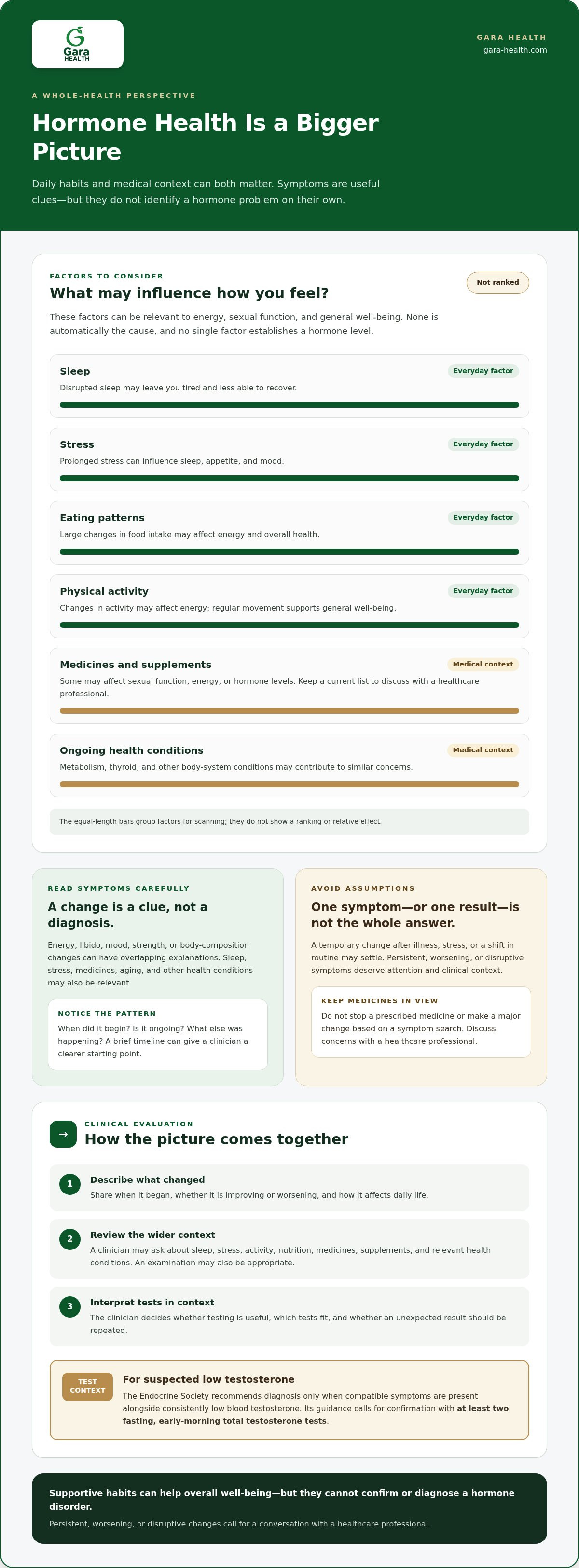
Evaluation depends on symptoms, health history, medicines, and clinical context. For suspected low testosterone, the Endocrine Society recommends diagnosis only when compatible symptoms are present alongside consistently low blood testosterone. Its guidance calls for confirmation with at least two fasting, early-morning total testosterone tests. An isolated symptom or single result shouldn’t be treated as the whole answer.
What Can Affect Men’s Hormones, and How Is an Imbalance Evaluated?
Hormone levels sit within a bigger health picture. Sleep, stress, eating patterns, physical activity, medicines, and ongoing health conditions may all be relevant when a man notices a change in energy, sexual function, or general well-being. That doesn’t mean any one factor is automatically the cause. Consider the timing and pattern of symptoms alongside your health history, rather than assuming a hormone problem or trying to correct one without evidence.
Which everyday and medical factors may influence hormone health?
Everyday routines can affect how you feel and function. Disrupted sleep may leave you tired and less able to recover; prolonged stress can influence sleep, appetite, and mood; and large changes in food intake or activity may affect energy and overall health. Regular movement and adequate nutrition support general well-being, but no single workout or food can establish or guarantee a particular hormone level.
Medical context matters, too. Some medicines can affect sexual function, energy, or hormone levels, while health conditions involving metabolism, the thyroid, or other body systems may contribute to similar concerns. Don’t stop a prescribed medicine or make a major change based on a symptom search. Instead, note what you take, including supplements, and discuss any concerns with a healthcare professional.
What to expect from a medical evaluation
An evaluation usually starts with a conversation, not a lab result in isolation. Be ready to describe what has changed, when it began, whether it is getting better or worse, and how it affects daily life. Your clinician may ask about sleep, stress, activity, nutrition, medicines, supplements, and relevant health conditions. An examination may also be appropriate, depending on your symptoms and history.
A test result needs clinical context before it guides treatment. A clinician decides whether testing is useful, which tests fit your concerns, and how to interpret results alongside symptoms, medical history, and the circumstances of testing. If a result is unexpected, they may consider whether it should be repeated or whether another explanation needs attention. A number viewed without context can lead to unnecessary worry or a misleading conclusion.
To make the discussion more useful, bring a short symptom timeline and a current list of medicines and supplements. Mention changes that persist, worsen, or interfere with work, relationships, sleep, or exercise. This gives the conversation a clearer starting point and helps guide appropriate next steps. Searching for natural remedies for hormonal imbalance in men can introduce helpful lifestyle ideas, but it shouldn’t replace an assessment when symptoms continue or concern you.
Gara Health offers functional wellness beverages for people who want to include them in an everyday routine. These products are not a way to diagnose or correct hormone levels, so keep product choices separate from decisions about persistent symptoms.
Which Natural Remedies for Hormonal Imbalance in Men Have the Best Support?
The most dependable starting point is not a “testosterone-boosting” shortcut. It’s a set of habits that support overall health, energy, and recovery. These approaches are not proven fixes for a diagnosed hormone disorder, and results vary. The natural remedies for hormonal imbalance in men discussed here are supportive foundations, not substitutes for identifying and treating an underlying cause.
Lifestyle approaches with broader health benefits
Consistent sleep, balanced meals, regular movement, stress care, and moderating alcohol can all contribute to general well-being. Aim for steady habits rather than extremes: a nourishing meal, a walk, or a manageable bedtime routine is often easier to maintain than a restrictive diet or punishing workout plan. The table explains how each habit may support overall health and what it cannot promise about hormone levels.
| Approach | Why it may support health | Limit to keep in mind |
|---|---|---|
| Consistent sleep | Supports energy, mood, and recovery; a regular sleep routine may help protect these foundations. | Better sleep doesn’t confirm or treat a hormone disorder. |
| Balanced nutrition | Meals built around varied whole foods, protein sources, and healthy fats help meet general nutritional needs. | No single food or “hormone diet” is established as a way to normalize testosterone. |
| Resistance and aerobic activity | Strength work and activities such as walking or cycling support fitness, muscle function, and cardiovascular health. | Exercise is valuable for health, but shouldn’t be framed as a guaranteed hormone boost. |
| Stress care | Breathing exercises, meditation, or time outdoors may help make stress more manageable. | These practices support coping and well-being, not a cure for hormonal imbalance. |
| Alcohol moderation | Reducing excessive drinking can support broader health and sleep quality. | It won’t resolve every symptom or replace evaluation when concerns persist. |
Herbs and supplements: evidence, uncertainty, and safety
Interest in herbs and supplements is understandable, but evidence varies by ingredient, preparation, and study. Findings from limited research don’t establish a supplement as treatment for a diagnosed hormone disorder or show that it will work for everyone. “Natural” doesn’t automatically mean effective or risk-free. Supplements can have side effects or interact with medicines, and product quality can differ.
Before adding a supplement, share its product and ingredient information with a healthcare professional or pharmacist, especially if you take medication, have a health condition, or already use other supplements. Don’t stop prescribed treatment or delay an evaluation to try a product. Gara Health’s Himalayan Shilajit Resin 30g and Gara Shilajit Coffee Powder are wellness products, not established treatments for hormonal imbalance or low testosterone.
Choose habits you can maintain, and judge them by how they support your overall well-being, not by promises to “balance” hormones. Persistent symptoms still deserve attention from a qualified healthcare professional.
How Can Men Build a Practical, Sustainable Hormone-Supportive Routine?
A routine works best when it fits real life. Rather than changing everything at once or trying several supplements together, use a simple process: record what’s been changing, choose one or two manageable habits, track what happens, and review the pattern. This can help you build steadier foundations for well-being and give you clearer information to share with a healthcare professional. It can’t diagnose a hormone condition.
Start with a routine that is realistic to maintain
Pick changes that feel achievable, such as keeping a more consistent bedtime, adding a nutritious option to a meal, taking a regular walk, or making space for a calming activity. When practical, adjust one factor at a time so you can notice what feels sustainable. Avoid extreme diets, punishing exercise plans, and supplement stacking. The goal is consistency, not a perfect routine.
Keep brief notes in a journal or phone. Record:
- Sleep quality and any major changes to your schedule
- Energy and mood, including noticeable shifts during the day
- Movement or exercise, and how you felt afterward
- Changes in eating habits, stress, or alcohol use
- Medication or supplement changes, including when they began
Review your notes regularly for patterns, not proof. A better week after a lifestyle change doesn’t establish that a hormone level has changed, and a difficult day doesn’t mean your efforts have failed. The record is useful context for deciding what feels manageable and explaining persistent concerns during an appointment.
Know when self-care is not enough
Arrange a clinical evaluation if symptoms persist, worsen, or interfere with everyday life. Share the timeline and any relevant changes in sleep, activity, medicines, or supplements. Seek timely medical care for severe or rapidly worsening symptoms, rather than waiting to see whether a new habit helps. A clinician can help determine whether further assessment or treatment is appropriate.
Lifestyle steps can complement care, but they shouldn’t replace an indicated evaluation or prescribed treatment. That’s a key distinction when considering natural remedies for hormonal imbalance in men: a supportive routine may benefit general health, yet it can’t identify the reason for symptoms or reliably treat a diagnosed disorder.
If a functional beverage suits your everyday preferences, explore Gara Health’s functional beverages as an optional wellness choice, not as a way to diagnose or correct hormone levels.
Where Do Supplements Fit, and What Are the Next Steps?
Supplements can be part of a personal wellness routine, but they shouldn’t be asked to do the work of a diagnosis. Gara Health’s Himalayan Shilajit Resin 30g and Gara Shilajit Coffee Powder are wellness products, not established treatments for hormonal imbalance or low testosterone. Their availability, natural origin, or traditional use doesn’t prove they can change hormone levels or address the cause of symptoms.
If fatigue is part of what prompted your search, the low vitality warning signs guide offers another way to think about changes in energy. It isn’t a diagnostic tool, and ongoing or concerning fatigue is still worth discussing with a healthcare professional.
How to think about supplements without overpromising
Before adding a supplement, review its ingredients with a qualified clinician or pharmacist, especially if you take medication, have a health condition, or use other supplements. This conversation can help identify potential interactions and whether a product makes sense in your circumstances. Don’t stop prescribed medication, postpone an evaluation, or replace recommended care with a supplement.
For product-specific information, the Himalayan Shilajit resin buying guide can help you understand the product itself. Keep that separate from treatment advice: product details don’t establish a hormone benefit or show that shilajit treats a medical condition.
A clear next step for informed wellness choices
For general well-being, focus first on practical habits you can sustain, such as regular movement, nourishing meals, and a sleep routine that works for you. If symptoms are persistent, worsening, or disrupting daily life, arrange a clinical evaluation rather than waiting for lifestyle changes or a product to resolve them. A clinician can help determine whether testing or treatment is appropriate for your situation.
That’s the balanced approach to natural remedies for hormonal imbalance in men: build supportive habits, stay curious about what may be contributing to symptoms, and use professional guidance when health concerns persist. Supplements can be optional additions to a broader routine, not hormone solutions or substitutes for care.
If you’re exploring wellness products as part of your routine, explore Gara Health wellness products and consider how they fit alongside your broader wellness habits.
Choose Your Next Step with Confidence
Your next move doesn’t need to be dramatic. Pick one practical habit you’re ready to sustain, and give yourself room to notice how it fits your daily life. If symptoms continue to concern you, bring those observations to a healthcare professional instead of relying on a supplement to explain or resolve them.
Natural remedies for hormonal imbalance in men are best approached as part of broader wellness, not as a shortcut to changing hormone levels. Gara Health’s Himalayan Shilajit Resin 30g and Gara Shilajit Coffee Powder are optional wellness products, not established hormone treatments. Keeping that distinction clear lets you make informed choices while prioritizing appropriate care.
Ready to explore wellness options for your everyday routine? Explore Gara Health wellness products.
Frequently Asked Questions
Can natural remedies balance hormones in men?
Healthy routines may support general well-being, but no natural remedy can be promised to normalize hormones or treat a diagnosed condition. The natural remedies for hormonal imbalance in men discussed here, such as sleep habits and regular activity, are different from medical treatment for a confirmed disorder. Possible causes vary, so persistent symptoms deserve professional evaluation. Aim to support your health while finding out whether symptoms need specific care.
What are common signs of hormonal imbalance in men?
Possible signs include changes in energy, libido, mood, strength, or body composition, but none confirms a hormone disorder on its own. Feeling unusually tired after a run of poor sleep, for example, doesn’t identify the cause. Stress, medicines, and other health conditions can create overlapping changes. If a symptom persists, worsens, or feels concerning, note when it began and discuss it with a clinician rather than relying on an online checklist.
Can stress cause hormonal changes in men?
Stress can affect body systems involved in hormone regulation, but it isn’t possible to assume it explains one person’s symptoms. A demanding period may disrupt routines, so practical steps such as taking a short walk, setting aside quiet time, or practising slow breathing can support general wellness. These habits aren’t treatment for a hormone disorder. Seek professional guidance if symptoms persist, worsen, or begin affecting daily activities or relationships.
Does poor sleep affect testosterone in men?
Sleep is important to overall health and hormone regulation, but improving sleep can’t be promised to correct low testosterone. A consistent wind-down routine, a regular bedtime, and a calmer sleep environment may help support rest. Ongoing difficulty sleeping or persistent hormone-related concerns merit discussion with a healthcare professional. If testing is considered, results should be interpreted alongside symptoms and medical history, not treated as a diagnosis on their own.
Can supplements such as shilajit treat low testosterone?
This article doesn’t establish shilajit as a treatment for low testosterone or hormonal imbalance. Evidence and safety can vary among supplements, and some may interact with medicines or other products. If you’re considering shilajit, share the product information with a qualified clinician or pharmacist, particularly if you take medication. Don’t stop prescribed treatment or delay appropriate testing to try a supplement. A product’s natural origin or traditional use doesn’t prove a hormone benefit.
When should a man see a doctor about possible hormonal imbalance?
Arrange an evaluation for changes that persist, worsen, or trouble you, rather than trying to diagnose yourself from symptoms. A clinician can review your health history, medicines, and concerns, then decide whether examination or testing is appropriate. Bring a brief timeline of what changed and when. Seek timely medical care for severe or urgent symptoms. Self-care habits may support general health, but they shouldn’t delay or replace medical attention when it’s needed.


