


What if the answer to coffee jitters isn’t giving up your morning cup, but finding a steadier way to enjoy it? If coffee leaves your heart pounding, your thoughts racing, or your focus fading by mid-afternoon, you’re not imagining it. Caffeine affects people differently. How much you drink, when you drink it, and whether you’ve eaten can all shape how it feels. The goal of coffee without jitters isn’t to chase a stronger buzz. It’s to find a routine that supports clear, consistent energy.
This guide explains why caffeine can trigger shakiness or anxiety, what may contribute to an afternoon crash, and which practical habits can make your routine feel more balanced. It also covers lower-caffeine and functional coffee options, including Shilajit-infused and mushroom coffee, as part of a more mindful approach to your cup. You’ll find realistic adjustments to try, along with guidance on setting expectations for focused energy without the wired feeling.
Key Takeaways
- Understand how caffeine can affect alertness and contribute to jitters, so you can make more intentional choices about your coffee routine.
- Explore everyday ways to make coffee feel gentler, including drinking water and having food with your cup.
- Learn what Shilajit and fulvic acid add to functional coffee, and why realistic expectations matter when exploring these ingredients.
- Compare traditional coffee with mushroom coffee, and consider how functional ingredients may fit into a routine aimed at reducing jitters.
- See how Gara Health’s Shilajit and mushroom coffee powders bring functional ingredients into your daily brew.
The Science of the 'Coffee Crash': Why Caffeine Causes Jitters
Your morning coffee may sharpen your focus, but the same cup can leave your hands trembling or your heart beating faster than usual. Caffeine jitters are unwanted effects that occur when stimulation feels too intense. Caffeine blocks adenosine receptors. Adenosine is a chemical messenger that builds sleep pressure and helps regulate alertness. Blocking its signal can make you feel more awake, but it doesn’t erase the need for sleep or create energy from nothing.
That change can also increase nervous-system activation. For some people, caffeine’s stimulating effects bring sensations associated with the body’s “fight or flight” response, such as restlessness, a faster heartbeat, and shaky hands. The experience varies with caffeine amount, timing, personal sensitivity, sleep, and other factors. This overview of caffeine intoxication and jitters describes symptoms that can occur with excessive caffeine intake.
The Cortisol Connection: Timing Your Morning Brew
Cortisol follows a daily rhythm and often rises around waking. That doesn’t mean coffee automatically clashes with a morning cortisol peak or causes a crash. The “Cortisol-Caffeine Conflict” is a popular wellness phrase for a proposed overlap between morning cortisol and caffeine stimulation, not an established 2026 health standard. There’s also no universal evidence-based “9:30 AM Rule” or requirement to wait exactly 90 minutes after waking. Instead, notice how your energy and symptoms respond to coffee at different times.
Vasoconstriction and the Mineral Gap
Caffeine can temporarily narrow some blood vessels, including vessels in the brain, and may raise blood pressure in some people. These effects can make a heartbeat feel more noticeable, but they don’t explain every case of palpitations. Magnesium and potassium support normal muscle and nerve function. That doesn’t mean they reliably prevent caffeine-related tremors or that most coffee drinkers are deficient. Don’t assume jitters mean you have a “mineral gap.”
If symptoms appear, consider practical variables before assuming a nutrient deficiency: how much caffeine you had, whether you slept well, and whether you consumed other stimulants. Reducing the amount or choosing a lower-caffeine option may be a more direct experiment than taking supplements. Persistent or severe palpitations warrant medical advice, rather than an attempt to treat them with minerals.
Clean Energy Versus “Borrowed” Energy
“Clean energy” and “borrowed energy” are useful metaphors, not formal medical categories. Coffee can temporarily increase alertness, but it can’t replace sleep, food, or recovery. As caffeine wears off, returning tiredness may feel like a crash. Adenosine signaling becomes more noticeable again, rather than the body suddenly running out of energy. Finding coffee without jitters starts with understanding your response and adjusting your routine, not pushing through worsening symptoms.
Proactive Prevention: How to Manage Caffeine Sensitivity Daily
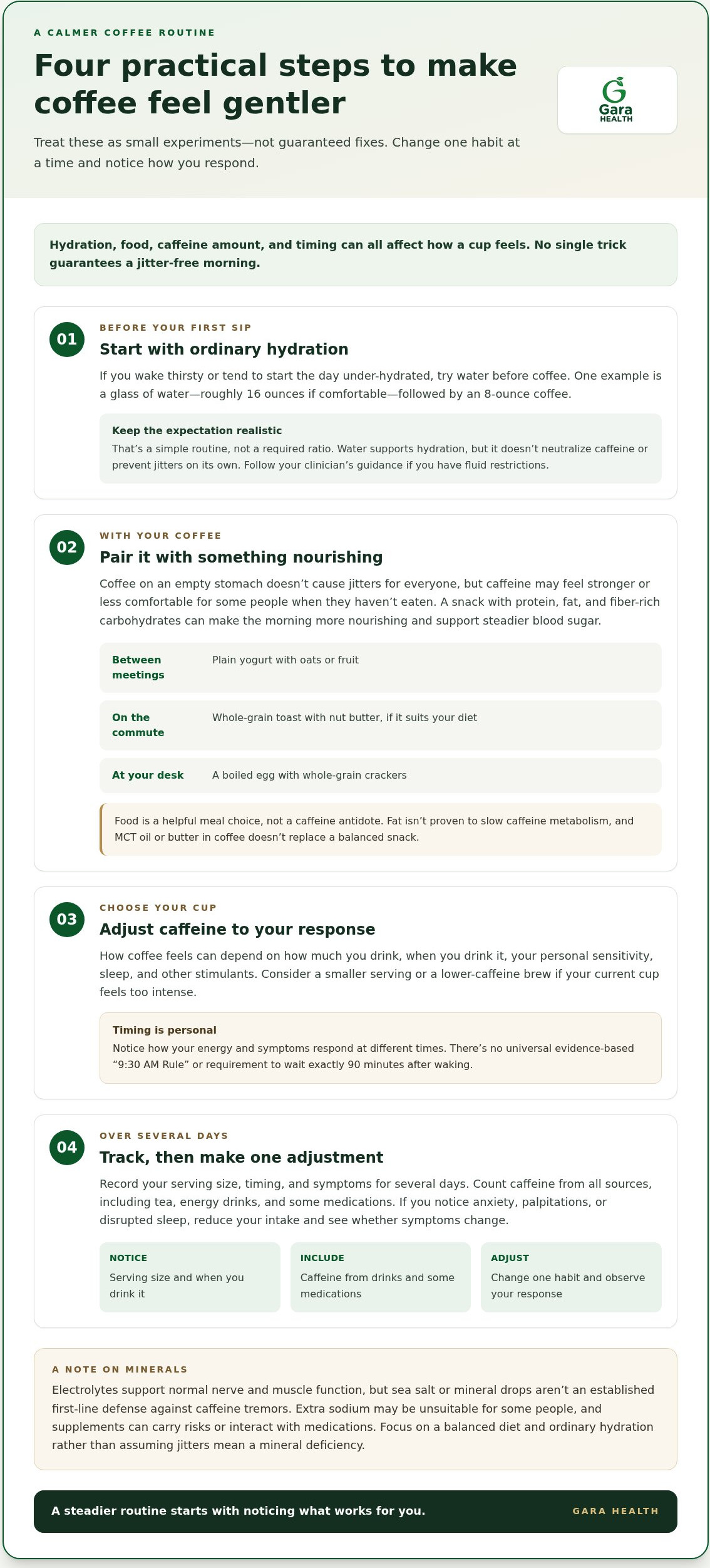
A calmer coffee routine starts before the first sip. Hydration, food, caffeine amount, and timing can all affect how a cup feels, but no single trick guarantees a jitter-free morning. Treat the suggestions below as practical experiments. Change one habit at a time and pay attention to your response.
Try water before coffee if you wake thirsty or tend to start the day under-hydrated. A glass of water, roughly 16 ounces if comfortable for you, followed by an 8-ounce coffee can be a simple routine, not a proven required ratio. Water supports hydration, but it doesn’t neutralize caffeine or prevent jitters on its own. If you have fluid restrictions, follow your clinician’s guidance.
Step 1: The Pre-Caffeine Mineral Load
Electrolytes such as sodium, potassium, and magnesium help regulate normal nerve and muscle function. However, adding sea salt or mineral drops isn’t an established first-line defense against caffeine tremors. Extra sodium may be unsuitable for some people, and supplements can carry risks or interact with medications. Focus on a balanced diet and ordinary hydration rather than assuming jitters signal a mineral deficiency. For context on possible signs of low energy, explore these warning signs of low vitality.
Step 2: Nutrient-Dense Pairing
Black coffee on an empty stomach doesn’t cause jitters for everyone, but caffeine may feel stronger or less comfortable for some people when they haven’t eaten. A snack with protein, fat, and fiber-rich carbohydrates can make your morning more nourishing and support steadier blood sugar. Fat isn’t proven to slow caffeine metabolism, so think of food as a helpful meal choice, not a caffeine antidote.
- Between meetings: Pair plain yogurt with oats or fruit.
- On the commute: Choose whole-grain toast with nut butter, if it suits your diet.
- At your desk: Try a boiled egg with whole-grain crackers.
MCT oil or butter in coffee adds fat, but it doesn’t replace a balanced snack and may not suit everyone’s digestion or nutrition needs. L-theanine, an amino acid found in tea, has been studied alongside caffeine for attention and alertness. It may support calmer focus for some people, but results vary. Tea or a supplement shouldn’t be treated as a guaranteed fix.
Set a personal caffeine ceiling by tracking serving size, timing, and symptoms for several days. Count caffeine from all sources, including tea, energy drinks, and some medications. If you notice anxiety, palpitations, or disrupted sleep, reduce your intake and see whether symptoms change. Sensitivity differs, so your best routine may involve a smaller cup, a lower-caffeine brew, or a functional option such as Gara Health coffee choices. Seek medical advice for persistent or severe symptoms.
The Adaptogenic Advantage: Using Shilajit to Balance Your Brew
Shilajit is a mineral-rich substance traditionally used in wellness practices and now included in some functional coffee blends. Calling it a “biological buffer” may sound appealing, but it isn’t a proven way to block caffeine’s effects or prevent jitters. Shilajit may interest people who want to explore a different coffee ritual, while the fundamentals still matter: caffeine amount, personal sensitivity, sleep, and overall nutrition.
Shilajit contains fulvic acid and minerals, but that doesn’t establish that it makes mitochondria work more efficiently, stabilizes the central nervous system, or lets someone safely rely on less sleep or more caffeine. Research on specific health effects is still developing. Think of a Shilajit-infused brew as an option to explore, not a treatment for anxiety, palpitations, or caffeine sensitivity.
Fulvic Acid: The Secret to Jitter-Free Focus
Fulvic acid is a naturally occurring component of humic substances. It’s sometimes described as helping transport nutrients or bind certain compounds, but claims that it carries nutrients directly into cells, removes toxins, or prevents caffeine’s spike-and-crash cycle aren’t established effects of drinking Shilajit coffee. The same caution applies to claims about improved mitochondrial efficiency. A more accurate way to describe the pairing is: “Caffeine can promote alertness, while Shilajit adds fulvic acid and minerals to the brew, but it isn’t proven to cancel caffeine’s stimulating effects.”
Himalayan Minerals and the Caffeine “Depletion” Claim
Caffeine can have a mild, short-term diuretic effect, particularly for people who don’t consume it regularly. That doesn’t mean a usual cup automatically flushes essential electrolytes or creates a mineral deficiency. Shilajit’s mineral content shouldn’t be treated as a guaranteed nutrient replacement or a defense against tremors either. The exact mineral profile can vary, so broad claims about a specific count or a direct effect on the nervous system deserve caution.
Adding an ingredient to coffee may be convenient, but “functional brewing” isn’t an established gold standard for replacing minerals. A varied diet remains the more dependable foundation for nutrient intake. If you have a diagnosed deficiency, kidney or heart concerns, take medication, or are considering mineral supplements, get individualized guidance from a qualified health professional rather than self-treating with a coffee blend.
From Stimulation to a More Intentional Ritual
A Shilajit-infused coffee powder can offer a simple way to include the ingredient in an existing routine. Gara Shilajit Coffee Powder combines coffee with Himalayan Shilajit, while Himalayan Shilajit Resin is another format. Neither should be assumed to guarantee “clean” energy or eliminate a crash. Follow product directions and pay attention to how your body responds. If jitters continue, consider reducing caffeine rather than expecting an added ingredient to override it.
For a deeper look at the format and its ingredients, explore this guide to Shilajit-infused coffee powder. A mindful approach to coffee without jitters pairs curiosity about functional ingredients with realistic expectations and a caffeine level that feels right for you.
Beyond the Bean: Functional Mushrooms and the Smooth Energy Curve
Functional mushroom coffee offers another way to rethink your daily brew, but it isn’t automatically low-caffeine or jitter-free. Regular coffee can feel like a quick lift, while mushroom coffee is sometimes described as offering a gentler energy curve. In practice, how energized you feel depends on the blend’s caffeine content, serving size, and your own response. Mushrooms don’t guarantee a plateau or cancel caffeine’s stimulating effects.
Ingredients such as Lion’s Mane, Cordyceps, and Reishi are popular in functional coffee and associated with different wellness interests. Evidence for specific effects in coffee blends is still developing, so consider them ingredients to explore, not proven treatments for anxiety, fatigue, or caffeine sensitivity.
Lion’s Mane: Focus Without the Frazzle
Lion’s Mane is studied for potential effects on nerve growth factor (NGF), a protein involved in the growth and maintenance of nerve cells. That research doesn’t establish that a cup of mushroom coffee increases NGF or produces an immediate focus boost. Pairing it with a smaller amount of caffeine may be a useful personal experiment if you want to reduce your caffeine intake while keeping a familiar coffee ritual. It’s an option to try, not a guaranteed productivity hack.
For a closer look at functional brewing and ingredient considerations, explore this mushroom coffee guide.
Cordyceps, Reishi, and the Adrenal “Shield” Claim
Cordyceps is often included in products marketed for stamina, partly because of interest in how it may relate to energy metabolism and ATP, the molecule cells use to transfer energy. That doesn’t mean Cordyceps reliably boosts ATP or physical performance when added to coffee. Reishi is commonly associated with relaxation in wellness marketing, but it hasn’t been shown to shield the adrenal glands from caffeine. Adaptogens shouldn’t be treated as a way to erase jitters or override a dose that feels too strong.
The hypothalamic-pituitary-adrenal (HPA) axis helps coordinate the body’s stress response. Caffeine can affect alertness and, in some people, feelings of anxiety, but saying coffee simply “stresses the HPA axis” oversimplifies a complex process. Mushrooms aren’t a proven adrenal shield. If coffee heightens anxious feelings, lowering caffeine may be more useful than relying on an added ingredient.
Choose a Blend With Realistic Expectations
Check whether a mushroom coffee contains caffeine and how much, if that information is provided. Start with a modest serving, avoid stacking it with other caffeine sources, and notice how your focus, energy, and sleep respond. Gara Health Mushroom Coffee offers a functional alternative for readers curious about mushroom-infused coffee powders. It isn’t a promise of a smooth energy plateau or coffee without jitters.
Ready to explore a mushroom-infused brew? Discover Gara Health Mushroom Coffee and make your next coffee choice with your own caffeine sensitivity in mind.
The Gara Health Way: Premium Blends for Peak Performance
A more intentional coffee ritual doesn’t need a complicated stack of separate supplements. Gara Health brings functional ingredients into coffee powders, offering a convenient way to explore Shilajit-infused or mushroom-infused blends. The goal is a more thoughtful daily choice, not a promise that any ingredient can prevent jitters or replace sleep, balanced meals, or a caffeine amount that suits you.
For readers seeking coffee without jitters, the first step is still to understand their caffeine response. Gara Shilajit Coffee Powder is described as a lower-caffeine blend, with 80% less caffeine than regular coffee. That may be worth exploring if a standard cup feels too strong, though individual responses vary and “lower caffeine” doesn’t mean caffeine-free.
Gara Shilajit Coffee: A Considered Morning Upgrade
The blend pairs coffee with Himalayan Shilajit, a mineral-rich ingredient traditionally used in wellness practices. It’s a simple alternative to combining coffee and Shilajit separately, without needing a do-it-yourself supplement stack. Shilajit’s minerals and fulvic acid are points of interest, but they shouldn’t be presented as proven ways to stabilize the nervous system, prevent caffeine’s effects, or guarantee steady energy.
Gara Health offers functional coffee options while encouraging realistic expectations. Follow product directions, keep track of caffeine from other sources, and notice how the blend feels as part of your routine.
Gara Health Mushroom Coffee: An Option for Focus-Minded Routines
Gara Health Mushroom Coffee offers a pre-blended option for people curious about functional mushrooms in their brew. Mushroom coffee is often chosen by those looking to change their coffee ritual, but claims about immunity, eliminating brain fog, or delivering laser-like focus shouldn’t be treated as guaranteed outcomes. A blend’s caffeine content also matters, so check the product information and factor it into your daily intake.
Creative professionals and students may appreciate the convenience of preparing one blend instead of measuring multiple ingredients, especially during a busy morning. Still, no coffee can promise better concentration for everyone. Start with a measured serving and observe your focus, comfort, and sleep. If you feel jittery, consider reducing the amount or choosing a lower-caffeine routine.
Peak performance is built through choices that support your whole day, not through a stronger stimulant alone. A thoughtfully prepared cup can be one small part of a steadier morning. Explore Gara Shilajit Coffee and take a more intentional approach to your daily brew.
Make Your Next Morning More Intentional
Your next cup can be a chance to notice what genuinely supports your focus and comfort. Keep your routine simple, pay attention to how caffeine affects you, and choose an option that fits your goals rather than chasing a stronger lift. The search for coffee without jitters is personal; no blend can promise the same experience for everyone.
For a functional coffee option featuring Himalayan Shilajit, Gara Shilajit Coffee Powder brings the ingredient into a convenient morning ritual. Gara Health’s blends are made for people interested in functional ingredients, while realistic expectations keep wellness grounded: ingredients can complement thoughtful habits, not replace them.
Explore Gara Shilajit Coffee and choose a morning ritual that feels aligned with your day. Small, considered changes can help you move toward steadier focus and a healthier relationship with caffeine. Your best rhythm starts with listening to your body.
Frequently Asked Questions
Why does coffee make me jittery but not everyone else?
People differ in their sensitivity to caffeine and how quickly their bodies process it. Your response can also change with sleep quality, stress, how much caffeine you’ve had, and some medications or health conditions. If a cup suddenly feels stronger than usual, note what else changed that day, including your sleep and other caffeine sources. Repeated or intense symptoms are a good reason to discuss your caffeine use with a healthcare professional.
Can I get rid of coffee jitters immediately?
There’s no reliable instant fix because your body needs time to process caffeine. Stop drinking caffeine for now, move somewhere calm, and sip water if you’re thirsty. Avoid trying to counter the feeling with more coffee, energy drinks, or unneeded supplements. Symptoms should ease as caffeine wears off, but seek urgent medical help for chest pain, fainting, severe shortness of breath, or a very fast or irregular heartbeat.
Does adding milk or cream reduce coffee jitters?
No. Milk or cream doesn’t remove caffeine or reliably prevent its stimulating effects. It changes the drink’s flavor and adds nutrients, but the caffeine dose remains tied to the coffee and serving size. If milky coffee feels gentler, that may be a personal preference, not evidence that caffeine has been neutralized. To reduce stimulation, choose a smaller serving or lower-caffeine or decaffeinated coffee.
Is mushroom coffee actually jitter-free?
No mushroom coffee can be assumed to be jitter-free. Some blends contain coffee and therefore caffeine, and the amount can vary between products. Mushrooms don’t cancel caffeine or guarantee a particular energy response. Check the ingredient and caffeine information, if provided, and begin with a modest serving if you’re sensitive. Gara Health Mushroom Coffee is one functional coffee option, but it shouldn’t be treated as a remedy for caffeine-related symptoms.
How much Shilajit should I add to my coffee to stop the shakes?
There’s no established amount of Shilajit proven to stop caffeine-related shaking. Don’t increase the dose to try to treat jitters. Instead, reduce or pause caffeine and follow the directions for any Shilajit product you use. Shilajit can interact with health conditions or medications, so ask a healthcare professional whether it’s appropriate for you, especially if you’re pregnant, nursing, or managing a medical condition.
What is the best time of day to drink coffee to avoid a crash?
There isn’t one ideal time that works for everyone. A practical starting point is to have coffee when you’re alert enough to enjoy it, then avoid late-day caffeine if it interferes with your sleep. Track the time of your last cup alongside bedtime and sleep quality for several days. If you notice a pattern of restless nights or next-day fatigue, move your last serving earlier or reduce it.
Can dehydration make caffeine jitters feel worse?
Being dehydrated can make you feel unwell, tired, or light-headed, which may add to the discomfort you associate with caffeine. But dehydration isn’t the only explanation for jitters, and drinking water won’t quickly remove caffeine from your system. Keep water available and drink according to thirst and your health needs. If shakiness persists even when you feel well hydrated, consider lowering caffeine and seek medical advice if symptoms concern you.
Are there specific foods that neutralize caffeine?
No food neutralizes caffeine or rapidly clears it from your body. A meal or snack can help you feel more settled if coffee on an empty stomach doesn’t suit you, but it doesn’t erase the caffeine dose. Try a balanced breakfast, such as eggs with whole-grain toast or yogurt with fruit, and see how you feel. For less stimulation, adjust the coffee itself by choosing a smaller or decaffeinated serving.


