


What if supporting desire starts not with a supplement, but with the conditions that help you feel rested, safe, and connected? If your libido has shifted, it can feel confusing or affect your confidence and relationships. Desire naturally varies, and stress, fatigue, pain, health changes, and relationship dynamics can all play a part. Exploring natural ways to boost female libido doesn’t mean chasing a quick fix or blaming yourself.
This guide will help you consider what may be influencing your desire and try realistic, low-pressure habits without expecting overnight results. We’ll look at sleep, stress, movement, communication, and other health factors, while separating cautious evidence from bold supplement claims. “Natural” doesn’t automatically mean safe, and supplements aren’t a universal solution. If a change is persistent, distressing, or linked to pain or other symptoms, a healthcare professional can help investigate possible causes and discuss options. Start with curiosity, not pressure: small steps can help you understand what your body and life may need.
Key Takeaways
- Natural ways to boost female libido begin with noticing patterns in your desire, wellbeing, and daily life, not aiming for a single “normal” level.
- Try one manageable routine change at a time, such as making space for rest or choosing realistic movement, and notice how you feel.
- Use open, low-pressure conversations to express needs, boundaries, and what helps intimacy feel comfortable.
- Assess supplement claims carefully: “natural” doesn’t guarantee safety, and a product isn’t a proven libido treatment just because it’s marketed for desire.
- If changes persist, feel distressing, or come with pain or other symptoms, a healthcare professional can help explore possible causes and options.
Natural ways to boost female libido start with understanding what influences desire
Sexual desire isn’t a fixed setting. It varies from person to person and can shift with stress, health, relationships, and different life stages. Libido simply means a person’s interest in sexual activity, but there’s no single level of desire that everyone should have. For some people, interest appears spontaneously; for others, desire is responsive and may develop after closeness, affection, or pleasurable touch begins. Either pattern can be normal.
Low desire becomes a concern when a change from your own usual experience feels distressing or disrupts your wellbeing, not because you fall short of a universal standard. This distinction can help you explore natural ways to boost female libido with curiosity rather than pressure to meet someone else’s expectations. You may encounter the term “aphrodisiac” for substances that increase libido; the term describes claims and traditions, not proof that a substance reliably changes desire.
When is low sexual desire a concern?
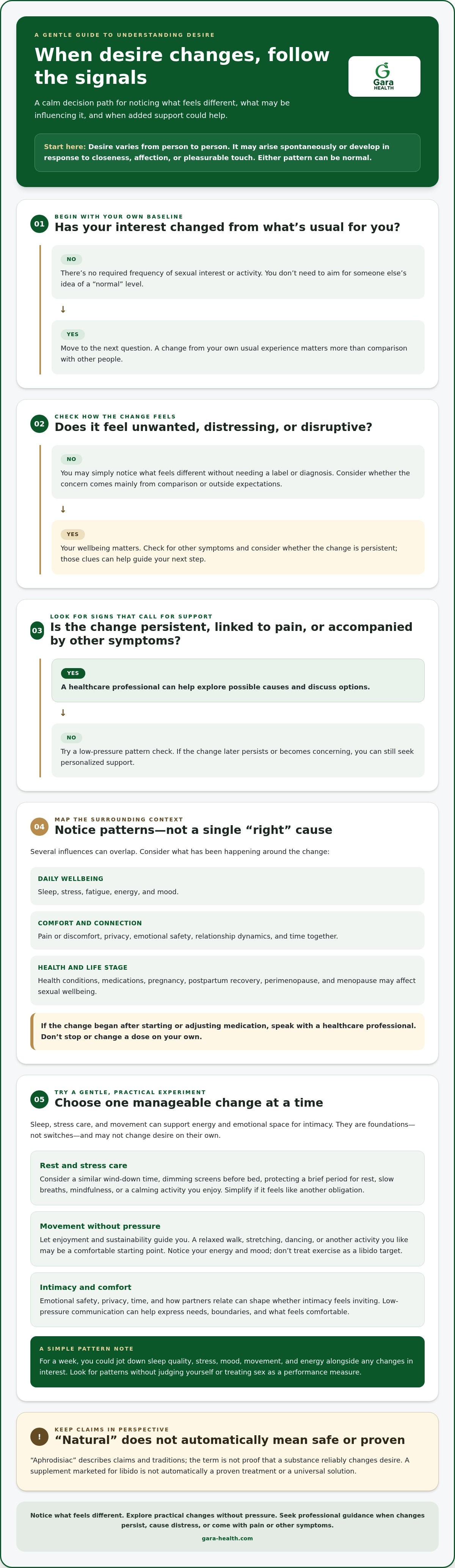
Start with your own baseline. Has your interest changed, and does that change feel unwanted, upsetting, or disruptive to intimacy or daily life? There’s no required frequency of sexual interest or activity. You also don’t need to label yourself or reach a diagnosis before asking for support. A compassionate check-in can be as simple as noticing what feels different and what, if anything, you’d like to change.
What can affect female libido?
Desire can respond to several overlapping influences, so there may not be one clear cause. A demanding stretch at work, poor sleep, low energy, or a change in mood can leave less room for interest. Pain or discomfort may make intimacy less appealing, while privacy, relationship dynamics, emotional safety, and time together can shape how desire develops. Life-stage changes, including pregnancy, postpartum recovery, perimenopause, and menopause, may also affect sexual wellbeing.
Health conditions and some medications can play a role too. If a change began after starting or adjusting medication, speak with a healthcare professional rather than stopping or changing a dose on your own. A simple pattern check can help you decide what to try:
- Notice: When did the change begin? Is it steady, or does it come and go?
- Look around: What’s happening with sleep, stress, mood, pain, health, or connection?
- Check how it feels: Is the change personally distressing, or mainly driven by comparison or outside expectations?
This isn’t a test with a right answer. It’s a starting point for choosing practical next steps and seeking clinical guidance if the change persists, causes distress, or comes with pain or other symptoms.
Build a desire-supportive foundation with sleep, stress care, and movement
Sleep, stress care, and movement can support the energy and emotional space that make intimacy feel more possible. They’re foundations, not switches: a steadier routine may help you feel better overall, but it won’t necessarily change desire on its own. Lifestyle changes can support wellbeing, but they can’t resolve every cause of low desire.
Chronic stress and exhaustion can leave your attention focused on getting through the day, with little energy left for closeness or pleasure. That doesn’t mean you’re doing anything wrong. Treat these habits as gentle experiments, not a test you have to pass. For broader context, Mayo Clinic outlines several causes of low sex drive, including physical and emotional factors.
Create a realistic sleep and stress routine
Choose one small change that fits your life. You might keep a similar wind-down time, dim screens before bed, or protect a brief period for rest where practical. A few slow breaths, a short mindfulness practice, or a calming activity you enjoy can offer a pause in a demanding day. If a routine feels like another obligation, simplify it. Stress reduction may support wellbeing, but it won’t restore desire for everyone.
Use movement and energy habits without pressure
Let enjoyment and sustainability guide movement. A relaxed walk, stretching, dancing, or another activity you like can be a more inviting starting point than an intense plan. Notice how your energy and mood respond; pushing through exhaustion or overtraining may leave you with less capacity, not more. There’s no need to turn exercise into a libido target.
For a week, you could jot down sleep quality, stress, mood, movement, and energy alongside any changes in interest. Look for patterns without judging yourself or treating sex as a performance measure. Persistent fatigue deserves attention in its own right, especially if it affects everyday life. Discuss it with a healthcare professional rather than assuming it’s simply a lifestyle issue. For more on energy concerns, see 7 Warning Signs of Low Vitality and How to Restore Your Natural Energy in 2026.
If a functional beverage is already part of your routine, you can explore Gara Health coffee options as a general lifestyle choice, not as a treatment for low libido. Focus on habits that feel supportive and seek medical guidance when symptoms persist or concern you.
Improve intimacy and comfort with communication, time, and body awareness
Desire doesn’t grow in a vacuum. Emotional safety, privacy, time, and the way partners relate to one another can all shape whether intimacy feels inviting. Practical changes, such as setting aside unhurried time together or creating more privacy, may ease pressure. These can be supportive natural ways to boost female libido, but they’re options to explore, not obligations or guaranteed fixes.
Intimacy also doesn’t have to lead to sex. Affection, cuddling, or a conversation can be meaningful on their own, and either person can pause or change their mind at any point. Consent should be freely given and ongoing. If touch feels uncomfortable, there’s no need to push through in the hope that desire will follow.
Talk about desire without blame
Choose a calm moment outside a conflict or sexual situation. First-person statements can keep the conversation focused on your experience rather than blame: “I feel more relaxed when we have time together without pressure,” or “I’d like us to talk about what feels comfortable.” You could also ask, “What kind of affection feels good to you?” or “How can we make more space for closeness?”
Listen to each other’s needs and boundaries, then look for shared, low-pressure steps. One person shouldn’t be made responsible for creating desire or solving every difficulty. The aim is understanding, not a promise that either partner will feel or act a certain way.
Make room for comfort and responsive desire
For some people, interest may emerge after wanted affection or closeness begins rather than arriving beforehand. This is one possible pattern, not a rule or a reason to continue when you don’t want to. If you choose to explore intimacy, agree that it can stop at any point and that affection can remain just affection.
Recurring pain, vaginal dryness, or fear of discomfort deserves attention, not endurance. These experiences can affect intimacy and may have different causes. Mayo Clinic describes factors that can affect sexual desire; a healthcare professional can help assess persistent discomfort or distressing changes and discuss suitable options.
Small steps count: naming a boundary, asking for more time, or sharing what helps you feel safe can create a more supportive space for connection. Let comfort and genuine choice guide what happens next.
Be cautious with libido supplements and natural remedy claims
“Natural” can sound reassuring, but it doesn’t tell you whether a supplement works, is safe, or suits your health needs. Traditional use, early research, and established clinical evidence are different things. A remedy may have a long history of use or a small study behind it without being proven to improve sexual desire. Shilajit, ashwagandha, tribulus, and coffee should not be presented as established treatments for low libido.
That distinction matters if you’re exploring natural ways to boost female libido. A product may be associated with energy or general wellness, but that isn’t the same as evidence that it improves sexual desire or function. Supplements can also cause side effects or interact with medications and health conditions.
How to evaluate natural libido claims
Look past the headline and ask what was actually studied. Was the research conducted in people, and did it test the same ingredient and dose as the product? Did it measure sexual desire or function, or a different outcome such as general energy? Evidence for one preparation can’t automatically be applied to every product containing a similar ingredient.
Be cautious of dramatic promises, testimonials, and before-and-after stories. They may describe an individual experience, but they don’t establish that a supplement caused the result or will work for someone else. Natural doesn’t automatically mean effective, safe, or appropriate for everyone.
When to discuss supplements with a clinician
Before starting a supplement, discuss it with a healthcare professional if you’re pregnant, breastfeeding, managing a chronic condition, or taking medication regularly. Share the product label and ingredient list so potential side effects or interactions can be considered. If you suspect a prescribed medicine is affecting desire, don’t stop or change it without guidance from the prescriber.
Gara Health’s Himalayan Shilajit resin, Shilajit coffee powder, and mushroom coffee are general wellness offerings, not proven treatments for low libido, and they shouldn’t replace medical assessment or care. If you’re interested in incorporating a beverage or supplement into your broader routine, explore Gara Health wellness products with realistic expectations. Keep the focus on overall wellbeing, and get professional advice before using a supplement to address a persistent or distressing change in desire.
Follow a simple plan and know when to seek personalized support
You don’t need to solve everything at once. A gentle plan can help you see whether daily context, comfort, or a health change may be shaping desire, without turning sex into a goal to hit. The aim is understanding and wellbeing, not producing a particular result. Natural ways to boost female libido can include practical habits, but a self-guided plan isn’t a substitute for care when symptoms persist or worry you.
A gentle two-week self-reflection plan
For two weeks, make a few brief notes about sleep, stress, mood, energy, comfort, and what was happening around any changes in interest. Keep it neutral. Then choose one manageable experiment, such as protecting wind-down time or having a low-pressure conversation about closeness. At the end, ask whether that step helped your overall wellbeing. Desire may or may not change, and that doesn’t mean you’ve failed.
- Notice: Record patterns, not scores or targets.
- Choose: Try one realistic change at a time.
- Review: Keep what feels supportive and adjust what doesn’t.
What to discuss with a healthcare professional
Consider making an appointment if a change in desire is persistently distressing, begins suddenly, involves pain, or seems connected to medication. You can share when it started, related symptoms, recent health or life-stage changes, and medicines or supplements you use. Ask whether pain, hormonal changes, mood, or another health factor could be contributing. Don’t stop or alter prescribed medication without the prescriber’s guidance.
There’s no need to wait until you have a perfect explanation. A clinician can help you consider possible causes and discuss options that fit your health and preferences. Asking for help is valid, and care can be individualized. Your notes may offer a useful starting point, but you don’t need to track anything if that feels stressful.
For general wellness interests separate from libido treatment, Explore Gara Health.
Take a thoughtful next step toward feeling more connected
Desire can shift, and it doesn’t need to match anyone else’s expectations. Helpful natural ways to boost female libido often begin with noticing what affects your wellbeing, then trying a small, realistic change in rest, stress care, movement, or communication. Give yourself room to observe without turning sex into a measure of success.
Keep supplement claims in perspective: “natural” doesn’t guarantee safety or proven results, and supplements may interact with medicines or health conditions. If low desire continues to distress you, or you experience pain, sudden changes, or other concerns, a healthcare professional can help explore possible causes and personalized options.
Wellness products can be part of a general routine, but they aren’t treatments for low libido. Explore Gara Health for general wellness offerings, and keep choosing steps that feel supportive for you. With curiosity, care, and the right guidance, you can move forward without shame or pressure.
Frequently Asked Questions
Can natural lifestyle changes increase female libido?
Sleep, stress care, enjoyable movement, physical comfort, and open communication may support wellbeing and intimacy, but no habit guarantees higher desire. These natural ways to boost female libido work differently for different people, and influences can overlap. Consider relationship context, health conditions, and medications as well as daily routines. If a change persists or causes distress, a healthcare professional can help explore possible causes and suitable options.
What is the fastest natural way to boost female libido?
There’s no reliable instant natural fix for increasing desire. Start by noticing what’s affecting you right now: fatigue, stress, lack of privacy, or discomfort may call for different responses. Choose one low-pressure adjustment, such as resting, making time for privacy, or talking about what feels comfortable. Be wary of supplements promising dramatic, immediate results. Seek professional advice about sudden changes, pain, or other concerning symptoms.
Can stress and lack of sleep affect female libido?
Yes, stress and insufficient rest may influence energy, mood, attention, and interest in intimacy, although the effects differ from person to person. A consistent wind-down routine, a calming activity, or protected time to rest may support overall wellbeing, but these steps aren’t a guaranteed cure for low desire. If exhaustion or mood changes continue, or low desire remains distressing, discuss it with a healthcare professional.
Do natural supplements help increase female libido?
Evidence varies by ingredient, and many supplement claims aren’t established treatments for low libido. Products can have side effects or interact with medications, and “natural” doesn’t guarantee safety or suitability. Discuss a supplement with a qualified healthcare professional, especially if you have a health condition, are pregnant or breastfeeding, or take medication regularly. Gara Health products are general wellness offerings, not treatments for low libido or sexual dysfunction.
Can menopause or hormonal changes affect female desire?
Yes, life-stage changes may coincide with shifts in desire, comfort, sleep, or mood, but experiences vary. Hormones may be one factor, yet not every change in libido is caused by hormones. If lower desire is persistently distressing, or you have pain or other symptoms, a healthcare professional can assess possible contributors and discuss options suited to your circumstances. You don’t need to work out the cause alone.
When should I talk to a doctor about low libido?
Consider speaking with a healthcare professional if a change is persistent, distressing, sudden, associated with pain or other symptoms, or possibly linked to medication or a health condition. You can describe when it began and what else has changed, even if you’re unsure of the cause. Don’t stop or change prescribed medication on your own. A clinician can help review possible factors and discuss appropriate next steps.
Is it normal for female libido to change over time?
Yes, desire can vary between individuals and shift with relationships, health, stress, and life stages. There’s no single frequency that defines normal libido, so comparing yourself with others may not tell you whether something needs attention. Consider whether a change feels unwanted or causes distress. Support may be helpful if it does, or if the change comes with pain or other symptoms.


