


What if the best natural supplement for fatigue isn’t a supplement at all, but first finding out why your energy is low? When tiredness starts disrupting everyday routines, it’s understandable to look for a natural way to feel more like yourself. Fatigue can have many causes, from poor sleep and stress to a nutrient deficiency, a health condition, or a medication effect.
Supplements may be relevant when they address a specific need, but they aren’t a shortcut to a diagnosis or a guaranteed energy fix. The right choice depends on your health, what you’re already taking, and whether there’s reason to think an ingredient may help in your situation. For example, iron may help when iron deficiency is contributing to fatigue, but taking it without guidance isn’t right for everyone.
This guide explains common contributors to fatigue, where supplements may fit, and how to weigh evidence, product information, and safety. It also covers practical next steps and when persistent or severe fatigue deserves medical attention, so you can support your wellbeing without overlooking the cause.
Key Takeaways
- Notice whether fatigue is occasional or persistent, worsening, or interfering with daily life, and use that pattern to guide your next step.
- A natural supplement for fatigue may be relevant when it addresses a specific need, but extra nutrients aren’t automatically helpful.
- Compare nutrient supplements, botanical ingredients, and functional beverages with realistic expectations and attention to safety.
- Use a step-by-step approach: track patterns, consider possible contributors, seek assessment when appropriate, and avoid changing several things at once.
- Explore Himalayan Shilajit Resin 30g, Gara Shilajit Coffee Powder, and Gara Health Mushroom Coffee as optional wellness choices, not fatigue treatments.
Natural Supplements for Fatigue: What They Can and Cannot Do
Low energy can make ordinary tasks feel unexpectedly demanding, but fatigue is a symptom, not a diagnosis. It doesn’t automatically mean you have a nutrient deficiency, and it can have more than one contributor. A natural supplement for fatigue may be worth considering when it matches a specific need, but it can’t identify why you feel drained or work as a universal energy fix.
Fatigue is a sense of physical or mental exhaustion that can make it harder to function; sleepiness is feeling that you could fall asleep. They can happen together, but they aren’t the same. Noting which one you experience can help you describe your symptoms and decide what to do next.
Dietary supplements include products intended to add nutrients or other substances to the diet. For a basic overview, see What are dietary supplements? A product’s availability doesn’t mean it’s right for every cause of low energy. A supplement is most relevant when it addresses a specific gap or need. Adding more of a nutrient your body already has enough of may not improve how you feel.
When low energy may need more than a supplement
Consider the pattern: Is the tiredness occasional and improving with rest, or is it persistent, getting worse, or interfering with work, self-care, or daily activities? When fatigue lasts or limits your routine, seek clinical evaluation rather than relying on trial and error. Sudden, severe fatigue with symptoms such as chest pain, trouble breathing, or fainting calls for urgent medical care.
There isn’t a single timeline that fits everyone. If fatigue is unexplained, persistent, or worsening, make an appointment with a healthcare professional. Be ready to describe when it began, how it affects your day, and what seems to change it. Those details can help guide an assessment.
Why identifying the cause matters
Sleep disruption, ongoing stress, eating patterns, medication effects, and health conditions can all contribute to low energy. Similar symptoms can have different causes, so fatigue alone can’t confirm low iron or another deficiency. A clinician can consider your history and whether testing is appropriate before you add a nutrient supplement.
Notice whether your energy shifts with sleep, stress, meals, activity, or a medication change, and bring that pattern to your appointment. You can also review these warning signs of low vitality as prompts to reflect on changes in your routine, not as a way to diagnose yourself. First understand the signal, then decide with appropriate guidance whether a supplement has a sensible role.
How Nutrient Status and Supplementation Relate to Fatigue
Nutrients help the body carry out everyday tasks, from making red blood cells to supporting muscles and nerves. Correcting a low level is different from adding more when intake and levels are already adequate. Supplements are most plausible when they address an identified need, not simply because fatigue is present. A clinician may consider your symptoms, health history, diet, and medicines when deciding whether testing could clarify that need.
Iron, vitamin B12, folate, and vitamin D
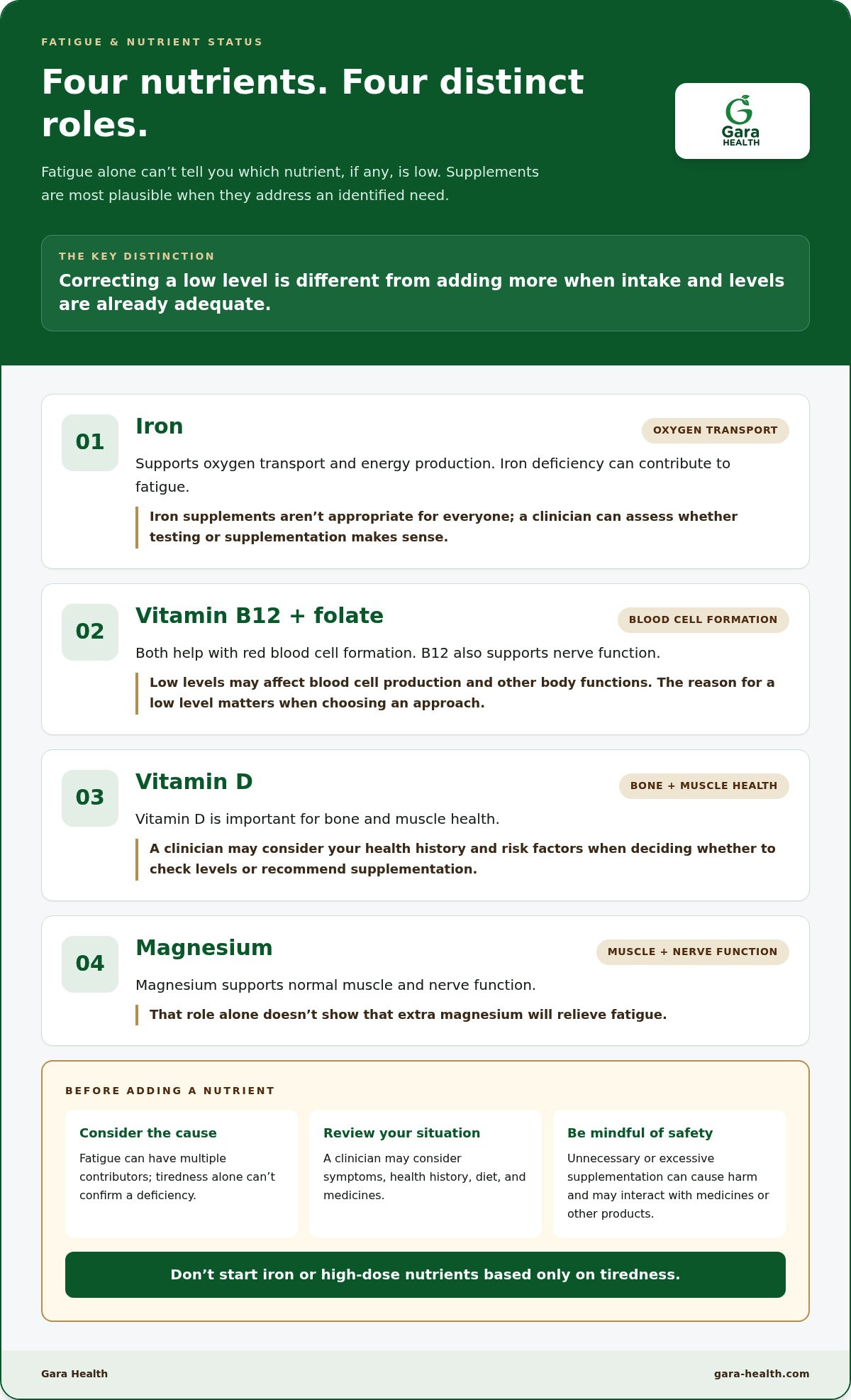
These nutrients have distinct roles, and low levels don’t all have the same cause or remedy. Iron supports oxygen transport and energy production; B12 and folate help with red blood cell formation, while B12 also supports nerve function. Vitamin D is important for bone and muscle health. None is a universal energy booster, and fatigue alone can’t tell you which, if any, is low.
- Iron: Deficiency can contribute to fatigue, but iron supplements aren’t appropriate for everyone. A clinician can assess whether testing or supplementation makes sense.
- Vitamin B12 and folate: Low levels may affect blood cell production and other body functions. The reason for a low level matters when choosing an approach.
- Vitamin D: A clinician may consider your health history and risk factors when deciding whether to check levels or recommend supplementation.
- Magnesium: It supports normal muscle and nerve function, but that role alone doesn’t show that extra magnesium will relieve fatigue.
Unnecessary or excessive supplementation can cause harm, and supplements can interact with medicines or other products. Don’t start iron or high-dose nutrients based only on tiredness. If you’re concerned about a possible deficiency, bring your symptoms, diet pattern, and current supplement list to a healthcare professional. They can determine whether testing and a targeted plan are appropriate.
Magnesium and other popular wellness ingredients
Separate established nutrient functions from claims of fatigue relief. Botanicals and adaptogens, including shilajit, are often discussed in wellness routines, but claims about energy should be weighed against the quality and limits of the evidence for the specific ingredient and product. The Shilajit energy explainer offers ingredient context, not a substitute for assessing fatigue or making treatment decisions.
Product labels and marketing language aren’t proof that a supplement will address your needs. The FDA’s FDA Regulation of Dietary Supplements overview explains the agency’s role and why consumers should consider possible benefits and risks. If you’re exploring optional wellness products, Gara Health’s shilajit and coffee offerings can be part of a broader routine, not treatment for fatigue. Choose with realistic expectations and attention to your needs and safety.
Comparing Natural Supplements for Fatigue Without Overpromising
Choosing a natural supplement for fatigue starts with matching the product category to a realistic purpose. Nutrients such as iron or vitamin B12 may be relevant when a specific need is identified. Botanicals and functional beverages are different: they aren’t substitutes for correcting a nutrient deficiency, and a traditional use or an “energy” label doesn’t prove they relieve fatigue. Evidence and safety can vary by ingredient and product, so look beyond broad claims and review the specific product information.
| Category | Potential role | Evidence caveat | Safety consideration | When to discuss with a clinician |
|---|---|---|---|---|
| Nutrient supplements, such as iron, B12, folate, vitamin D, or magnesium | May address a low intake or identified deficiency, depending on the nutrient and individual need. | Correcting a deficiency differs from taking extra; benefit for fatigue depends on the underlying situation. | Unneeded or excessive amounts may cause harm or interact with medicines. | If symptoms, diet, health history, or test results raise the possibility of a deficiency. |
| Botanical ingredients, including shilajit and ashwagandha | May be considered as optional wellness ingredients, not as nutrient replacement. | Evidence for fatigue relief can be limited or specific to an ingredient, preparation, or study population. Traditional use alone isn’t proof. | Products can differ; check ingredient details, warnings, and possible interactions. | Before use if you take medication, have a health condition, or are unsure whether the ingredient is appropriate. |
| Functional beverages, including coffee-based products | Can be a beverage choice within a routine; coffee may feel stimulating because of its caffeine. | A noticeable lift isn’t evidence that the drink corrects the cause of ongoing fatigue. | Consider caffeine and other listed ingredients, especially if they affect your sleep or interact with your routine. | If fatigue persists, or if caffeine or another ingredient may affect your health or medication use. |
Nutrient supplements versus botanical ingredients
Nutrients are substances the body needs for normal functions, while botanicals and other functional ingredients are a separate category with their own evidence questions. Traditional use can provide context, but it doesn’t establish that an ingredient treats fatigue. Don’t choose based on a “natural” label alone. Compare the specific ingredient, the claim being made, and the quality of current evidence.
How to assess a supplement label and its claims
Read the full ingredient list, serving information, warnings, and manufacturer statements, not just the front label. Be cautious with claims of a cure, guaranteed energy, or rapid results; these shouldn’t replace evaluation of ongoing fatigue. If you take medicines or use other supplements, review potential interactions with a qualified healthcare professional. Mayo Clinic’s Understanding the Causes of Fatigue also outlines why the cause matters when weighing options.
A Safer Step-by-Step Plan for Trying a Natural Fatigue Supplement
A thoughtful trial starts before you open a bottle. Use this sequence to spot patterns, focus on your wellbeing, and avoid mistaking a change in routine for proof that a supplement works.
- Notice the pattern. Record when fatigue shows up, how it affects your day, and whether it changes with sleep, meals, stress, or activity. Note other symptoms too.
- Review likely contributors. Consider recent shifts in your schedule, eating habits, stress, medicines, or other supplements. Don’t stop prescribed medication on your own.
- Seek assessment when appropriate. If fatigue is persistent, unexplained, or worsening, talk with a qualified healthcare professional before self-treating. They can help decide whether evaluation or testing is needed.
- Evaluate options carefully. If a clinician considers a supplement trial appropriate, choose a clear purpose and change one routine variable at a time. This makes it easier to notice what changes and what doesn’t.
Persistent fatigue deserves attention beyond adding supplements. A careful process helps you choose a safer next step and avoid overlooking a cause that needs attention.
Check safety before adding a supplement
Review your medicines, health conditions, allergies, and current supplements with a qualified professional. Take extra care if you’re pregnant or breastfeeding, preparing for surgery, or managing an ongoing medical condition. Read the full label, follow its directions, and avoid combining products with overlapping ingredients. “Natural” doesn’t automatically mean suitable for every person or combination.
Set realistic expectations and reassess
Before a clinician-approved trial, decide what you hope to observe, such as fewer low-energy periods during a particular part of your day. Track energy, sleep, symptoms, and unwanted effects in a simple daily note. Subjective improvement can be useful information, but it doesn’t establish on its own that a product caused the change or addressed the underlying issue.
Don’t increase the amount or add another product if you don’t notice a change. Stop using it and seek professional advice if concerning effects occur. If fatigue persists or worsens, reassess with a clinician rather than extending a trial or increasing intake without guidance. Keep the product label and your notes available so you can discuss the experience clearly.
If you’re considering a wellness product as one optional part of your routine, explore Gara Health’s shilajit and coffee offerings with realistic expectations. They aren’t treatments or guaranteed solutions for fatigue; your needs and safety considerations should guide your choice.
How Gara Health Products Can Fit a Thoughtful Wellness Routine
Natural wellness products can be one small part of a routine, but they aren’t a diagnosis or a guaranteed fix for fatigue. Gara Health offers three formats: Himalayan Shilajit Resin 30g, Gara Shilajit Coffee Powder, and Gara Health Mushroom Coffee. Each may suit a different preference. Choose based on format and ingredient information, not a promise of a particular energy outcome.
Choosing a product that fits your routine
Resin and coffee-based products fit into daily habits differently. When comparing options, consider which form feels practical and review the current ingredient information before deciding. For coffee-based products, check whether caffeine is present and consider your personal tolerance, usual caffeine intake, and how it may affect your sleep. A coffee format or ingredient name alone doesn’t tell you how a product will affect your energy.
If you’re evaluating resin, the Shilajit resin buying guide can help you consider what to review. Focus on the product’s ingredient information, label directions, and warnings. If you take medication, have a health condition, or have questions about personal suitability, discuss the product with a qualified healthcare professional before adding it to your routine.
Gara Shilajit Coffee Powder and Gara Health Mushroom Coffee are coffee-based options, while Himalayan Shilajit Resin 30g offers a different format. Format is a practical way to narrow choices, not evidence that one option is better for fatigue. Review current product information for ingredients, caffeine content, and safety details rather than inferring them from a product name.
Keep wellness support grounded and personal
A steady routine includes more than a supplement choice. Regular rest, nourishing meals, and appropriate assessment for persistent or worsening fatigue remain important parts of supporting wellbeing. If you’re exploring a natural supplement for fatigue, keep expectations realistic and use professional guidance when your health history or medicines make safety less straightforward.
The Shilajit coffee guide offers a format-specific resource for readers considering coffee powder. Use it alongside the product’s ingredient information, not as a substitute for clinical advice or proof that it will resolve fatigue. If tiredness continues to disrupt daily life, prioritize finding out why rather than adding products or increasing intake.
When you’re ready to explore these optional wellness choices, browse Gara Health products and compare the available formats with your needs, preferences, and safety considerations in mind.
Choose Your Next Step With Confidence
Your next move doesn’t have to be another guess. Notice what feels suitable for your routine, pay attention to how your body responds, and give persistent fatigue the attention it deserves. A natural supplement for fatigue is worth considering only when it fits your needs and safety considerations, not simply because a label promises more energy.
Gara Health’s range includes Himalayan Shilajit Resin 30g, Gara Shilajit Coffee Powder, and Gara Health Mushroom Coffee. These are products to consider within a broader routine, not treatments or guaranteed solutions. Review ingredient information and consider personal tolerance, including caffeine where relevant.
Explore Gara Health’s wellness products and compare the available formats with your preferences and safety considerations.
Frequently Asked Questions
Can natural supplements cure ongoing fatigue?
No supplement should be presented as a cure for ongoing fatigue. A natural supplement for fatigue may have a role if it addresses a specific need, but it can’t replace an assessment or treatment suited to the cause. Trying several products without improvement won’t clarify what’s driving symptoms. If fatigue is persistent, worsening, or disrupting work and daily activities, seek advice from a qualified healthcare professional.
Is it safe to combine natural fatigue supplements with prescription medicines?
Not always. A supplement may affect how a medicine works or add to the effects of another product, and “natural” doesn’t guarantee safety. Before combining anything, prepare a complete list of prescription and over-the-counter medicines, supplements, and relevant health conditions. Share it with a pharmacist or clinician, including the exact product label if possible. This helps them review your particular combination rather than relying on assumptions about an ingredient.
How much caffeine should I have if I feel fatigued?
There isn’t one appropriate amount for everyone. Caffeine can temporarily increase alertness, but sensitivity, sleep, health conditions, medicines, and caffeine from other drinks or foods all matter. Check the product label for caffeine information and consider whether it affects your sleep or makes you feel unwell. Don’t use caffeine to cover up fatigue that keeps returning; seek personalized guidance if you have health concerns.
What happens if fatigue continues after I start a supplement?
Continued fatigue doesn’t automatically mean you need a higher amount or a different product. The supplement may not suit you, or another factor may be involved. Don’t increase intake to chase a result. If you notice concerning effects, stop using the product and seek professional advice. Arrange an assessment if fatigue persists or worsens, and bring the product label and a note of when symptoms occur.
Can shilajit replace iron or vitamin B12 supplements?
No. Shilajit shouldn’t be treated as a substitute for iron, vitamin B12, or care directed by a clinician. These nutrients have different roles, and whether supplementation is appropriate depends on individual assessment. If iron or B12 has been prescribed, don’t stop it or replace it with shilajit on your own. Discuss any product you’re considering with a qualified healthcare professional, especially if you suspect a deficiency.
Are natural fatigue supplements safe during pregnancy or breastfeeding?
Safety depends on the ingredient, product, and personal circumstances, so don’t assume a supplement is safe because it’s plant-based or marketed as natural. If you’re pregnant, breastfeeding, trying to conceive, or caring for an infant, show the exact product and ingredient label to a qualified healthcare professional before use. This also lets them consider your health history and any medicines or other supplements you take.
Does feeling tired always mean I have a nutrient deficiency?
No. Tiredness can be connected to sleep, stress, diet, medication effects, daily demands, or health conditions, among other possibilities. Symptoms alone can’t identify a nutrient deficiency. Taking extra nutrients without a clear need may not improve how you feel and can carry risks. If you’re concerned, note what has changed in your routine and discuss with a clinician whether an evaluation or testing makes sense.


