


What if the best immune-support supplement is the one that addresses a real need, not the one making the biggest promise? It’s understandable to feel unsure: claims can sound convincing, while evidence, personal nutrient needs, and possible interactions are harder to sort through. Choosing natural supplements for immune system support calls for more than comparing labels or following a trend.
This guide explains the difference between supporting normal immune function and preventing illness, and why a nutrient deficiency can affect whether a supplement is useful. You’ll compare common ingredients such as vitamin D, zinc, and elderberry using practical evidence and safety criteria, including possible side effects, medication interactions, and product quality. The goal isn’t to add supplements by default. It’s to help you identify a specific need, know when professional advice matters, and choose a next step that fits your circumstances.
Key Takeaways
- Understand what natural supplements for immune system support may contribute, and why they can’t guarantee protection from illness.
- Compare vitamin C, vitamin D, and zinc in context instead of treating any one ingredient as a universal solution.
- Look beyond “natural” claims by considering evidence, possible interactions, side effects, and product quality.
- Use a practical checklist to identify a specific need and review your diet, medicines, and health circumstances before choosing a supplement.
- Consider Gara Health’s wellness products as optional routine choices, not proven immune treatments or substitutes for medical care.
What natural supplements for the immune system can, and cannot, do
Conflicting claims can make immune supplements confusing: one label promises a “boost,” while another suggests a nutrient is essential for everyone. A steadier starting point is to ask what your body needs and what the evidence supports. Natural supplements for immune system health may help fill a nutritional gap, but they aren’t a shortcut to guaranteed protection from illness.
Nutritional support helps the immune system function normally; it does not guarantee that you’ll avoid or recover from an illness. That distinction matters. A supplement intended for general wellness is not the same as a medicine used to prevent or treat a disease.
What does immune support mean in everyday wellness?
The immune system is a coordinated network of cells, tissues, organs, and signals, not a single switch that can simply be turned up. This comprehensive overview of the immune system offers background on its many components and functions. Nutrients help the body carry out normal processes, but taking extra does not automatically provide extra protection.
Immune health is part of a wider picture that includes what you eat, how well you sleep, your activity patterns, and your health conditions. Supplements are one possible part of a wellness routine, not a replacement for balanced habits or appropriate medical care. Broad promises to “boost” immunity can blur that distinction, so look for a clear explanation of what a product is intended to support.
When might a supplement be worth considering?
A supplement may be worth discussing if you have a specific dietary gap, a life circumstance that affects nutrient needs, or a confirmed deficiency. In those cases, ask whether a particular nutrient and amount suit your situation, rather than relying on a general immune claim. A healthcare professional can help assess a suspected deficiency and consider your health history.
If your diet already provides enough of a nutrient, adding more may not offer added value, and excessive intake can pose risks. More isn’t automatically better. Before adding a product, review your usual food sources and any supplements you already take, especially if you have a health condition or use medication. For a wider overview of ingredients and considerations, explore this immune support supplements guide.
Common natural immune supplements: nutrients, herbs, and evidence
Vitamin C, vitamin D, zinc, echinacea, and elderberry often come up in conversations about immune health, but they aren’t interchangeable or a universal prescription. Their relevance depends on the person, the preparation, and the reason for taking them. The National Institutes of Health Office of Dietary Supplements reviews the research in its evidence on vitamins and minerals for immunity.
Evidence snapshot: Nutrients help maintain normal immune function, but supplement benefits depend on individual need. Findings for botanicals can vary by product and study.
How do vitamin C, vitamin D, and zinc differ?
Vitamin C plays roles in immune function and other body processes. Getting enough matters, but taking extra isn’t automatically more beneficial. Vitamin D also contributes to normal immune function, and a low level may make intake more relevant. Whether supplementation is appropriate depends on factors such as diet, health status, and individual needs. Zinc supports immune-cell function. Low intake can be a concern, but that doesn’t mean everyone needs a zinc supplement.
For all three, consider food sources and existing supplements before adding more. Excessive intake can cause harm, and the appropriate amount depends on age, health, and other factors. Check current NIH Office of Dietary Supplements guidance for nutrient-specific information, and ask a qualified health professional about testing or supplementation if deficiency is a concern. Don’t assume that a high-dose product offers stronger protection.
What should readers know about echinacea and elderberry?
Research on echinacea and elderberry is less straightforward than many product claims suggest. Studies may examine different echinacea species, plant parts, extracts, or formulations, while elderberry products can also vary. Findings from one preparation don’t necessarily apply to another, and traditional use alone doesn’t establish that a product prevents or treats illness.
These botanicals may also cause sensitivities or interact with medicines. If you have allergies or a health condition, take medication, or are considering a supplement for a child, get individualized clinical advice before use. That’s more reliable than choosing based on “natural” branding alone.
For a wider look at how to assess ingredients and claims, read our immune support supplements guide. If you’re exploring broader wellness-routine options, you can also browse Gara Health’s natural wellness products.
How to compare immune supplements without falling for broad claims
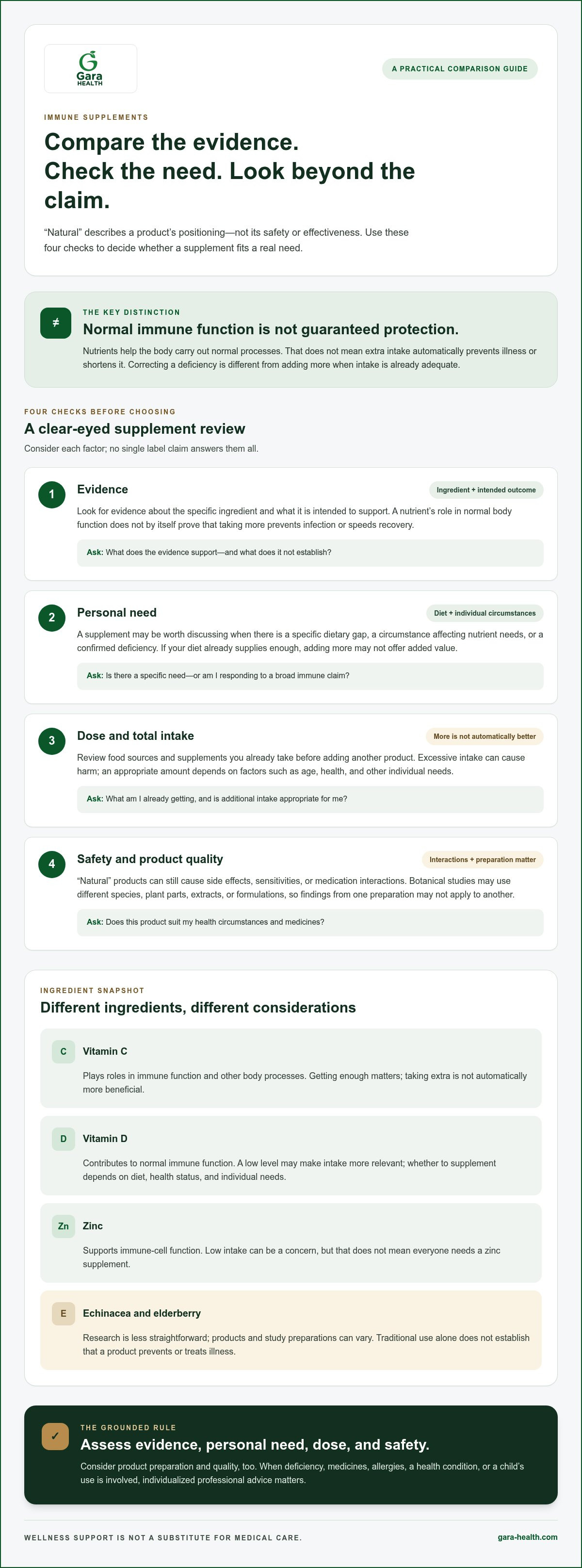
“Natural” describes a product’s positioning, not its safety or effectiveness. A plant-based ingredient can still cause side effects, interact with medication, or be unsuitable for some people. Compare a supplement by what the evidence says about its specific ingredient and intended outcome, then consider whether it meets a need you actually have.
Use this rule: assess evidence, personal need, dose, and safety, not marketing language alone. A nutrient’s established role in normal body function doesn’t automatically prove that taking more prevents infection or shortens an illness. Correcting a deficiency is different from adding a nutrient when your intake is already adequate.
What does the evidence actually support?
Evidence isn’t one verdict that applies to every supplement. It depends on the ingredient, amount, group studied, and outcome measured. Research about a nutrient’s role in the body, for example, is not by itself proof that a particular product prevents illness. Look for evidence that matches the exact claim, and be cautious when marketing jumps from “supports normal function” to “stops infections.”
Use the table as a starting point for questions, not as a ranking or recommendation. Your health context and the product’s specific formulation still matter.
| Ingredient | Evidence context | Key caveat | Safety question |
|---|---|---|---|
| Vitamin C | Has a recognized role in normal immune function. | A role in the body doesn’t establish that extra intake prevents illness. | Am I already getting enough, and what is my total intake? |
| Vitamin D | Supports normal body processes, including immune function. | Relevance may depend on intake, status, and individual circumstances. | Could my health history or other supplements affect what’s appropriate? |
| Zinc | Plays a role in normal immune function. | More isn’t automatically better; consider total intake and dose. | Could this overlap with another product or medication? |
| Echinacea or elderberry | Research varies across preparations and outcomes. | Findings for one extract may not apply to another product or claim. | Do allergies, medicines, or health conditions raise concerns? |
Which product-label details deserve attention?
Read the Supplement Facts panel, not just the front label. Check the serving size, amount per serving, ingredient form, and other listed ingredients. Then compare them with products you already take to spot overlap. Clear labeling makes it easier to understand what you’d be using.
Quality seals or certifications may relate to specific standards, but check what each one covers. They don’t prove that a supplement works for immune outcomes. Terms such as “natural,” “clean,” and “immune boosting” are not substitutes for evidence. For natural supplements for immune system support, look for a clear purpose, a suitable dose, and risks you understand.
How to choose and use natural immune supplements more safely
A thoughtful supplement routine starts with a reason, not a crowded cabinet. Before choosing natural supplements for immune system support, use this checklist to connect a product to your needs and spot potential safety concerns.
- Name the specific need. Consider whether you have a known deficiency, a dietary gap, or another reason to consider supplementation. If the goal is vague, pause before buying.
- Review your usual diet and current products. Note relevant foods and every supplement or fortified product you use. Ingredients can overlap, so consider your total intake rather than assessing a new product on its own.
- Read the entire label. Review active ingredients, serving directions, warnings, and other listed ingredients. Follow the product label and current professional guidance. Don’t guess at a dose or assume more will help.
- Consider your health context. If you’re pregnant, managing a health condition, or taking medicines, discuss the product with a qualified clinician or pharmacist. They can help assess whether an ingredient may interact with medication or be unsuitable for you.
- Make changes one at a time. Avoid starting several supplements together. A simple approach makes it easier to notice an unwanted reaction and identify what changed.
What should you check before taking a supplement?
Keep the label handy when discussing a product with a clinician or pharmacist. The full ingredient list and serving directions can help them review possible interactions and overlap with other products. Don’t use a supplement to self-manage symptoms that are persistent, severe, or unexplained. Those symptoms deserve professional assessment so the underlying cause isn’t overlooked.
How can you build a simple, realistic routine?
Start with everyday foundations: balanced eating, sufficient sleep, regular movement, and recommended preventive care. These habits support overall health and give you a practical base before deciding whether a supplement fits. Review your routine over time instead of adding products in response to every new claim.
Functional beverages are different from targeted supplements and shouldn’t be treated as proven immune products. If you’re curious about that distinction, explore this mushroom coffee guide. For optional products to enjoy as part of a broader wellness routine, browse Gara Health’s natural wellness products. These products aren’t substitutes for evidence-based medical care.
A grounded path to natural immune wellness with Gara Health
After weighing ingredients, evidence, and safety, choose a next step that fits your actual goal. A supplement doesn’t need an immune claim to have a place in a personal wellness routine, and no product should distract from a nutrient gap or health concern that deserves professional attention.
Where can wellness products fit into an informed routine?
Gara Health is an online retailer of natural wellness products, including Himalayan Shilajit Resin 30g, Gara Shilajit Coffee Powder, and Gara Health Mushroom Coffee. These may appeal as optional choices within a broader routine, depending on your preferences. They aren’t presented as clinically proven immune supplements or treatments for illness. A functional coffee is a beverage choice, and shilajit should not be assumed to correct a specific deficiency or provide immune protection.
If you’re considering shilajit as part of your general wellness routine, read the Himalayan Shilajit Resin buying guide for product-specific information. Keep your decision anchored in your needs, the product label, and any relevant safety advice rather than assuming a wellness product has a benefit that hasn’t been established for it.
What is a sensible next step?
Start by naming what you hope to address. Is there a particular dietary gap, a confirmed deficiency, or simply uncertainty about whether you need a supplement at all? If you’re unsure, or if you’re pregnant, managing a health condition, or taking medication, discuss your options with a qualified health professional. Bring the product label and a list of other supplements or medicines so they can consider your situation more fully.
Then keep your routine grounded: prioritize balanced eating, sleep, movement, and recommended preventive care. If a Gara Health product suits your preferences, you can explore it as one optional part of everyday wellness, without expecting it to prevent illness or replace medical guidance. Choosing natural supplements for immune system support should be a considered decision, not a promise-driven one.
Wellness products can complement healthy habits, but they don’t replace appropriate medical care. If you have concerning symptoms or a health question, seek professional advice and use supplements only as a suitable addition to your overall care.
Choose a Thoughtful Next Step for Your Wellness
The best natural supplements for immune system support are not necessarily the most popular or boldly advertised. Start with your individual needs, consider whether a dietary gap or deficiency is present, and weigh the evidence, dose, and safety of any product. Supporting normal immune function is different from preventing illness, and supplements fit best as a considered part of a wider approach to wellness.
Balanced eating, restful sleep, regular movement, and appropriate medical care remain important foundations. If you’re uncertain about a supplement, or take medication or manage a health condition, discuss it with a qualified health professional before adding it to your routine.
Gara Health sells wellness products directly through its online storefront, including Himalayan Shilajit Resin 30g, Gara Shilajit Coffee Powder, and Gara Health Mushroom Coffee. Consider them optional wellness choices, not proven immune treatments. Explore Gara Health’s wellness products and keep building a routine grounded in informed choices and healthy habits.
Frequently Asked Questions
Which natural supplements may support the immune system?
Vitamin C, vitamin D, and zinc support normal immune function, while echinacea and elderberry are popular herbal options with evidence that varies by preparation and study. That doesn’t mean everyone needs them or that they prevent illness. A supplement may be more relevant when there’s a specific dietary gap or confirmed deficiency. Consider the ingredient, evidence for its intended use, and your personal health needs before choosing.
Do natural immune supplements prevent colds or other infections?
No supplement can guarantee that you’ll avoid colds or other infections. Research findings depend on the ingredient, formulation, dose, population studied, and outcome measured, so a general claim about “immune support” doesn’t establish infection prevention. Nutrients help maintain normal body function, but that’s different from proving a product prevents disease. Keep up with appropriate preventive care, and seek medical advice for concerning symptoms rather than relying on supplements.
Is vitamin D helpful for immune health?
Vitamin D contributes to normal immune function, but taking extra isn’t automatically useful for everyone. Its relevance depends partly on factors such as dietary intake, vitamin D status, and individual health circumstances. If you suspect a deficiency or are considering regular supplementation, discuss whether assessment or a supplement makes sense with a qualified health professional. Follow current professional guidance and product directions, since excessive intake can be harmful.
Can vitamin C or zinc be taken every day?
Some people may take vitamin C or zinc daily when there’s a suitable reason, but whether it’s appropriate depends on total intake, health context, and the product’s serving directions. Check for overlap with multivitamins or other supplements, and don’t assume a higher amount offers greater benefit. Long-term or high-dose use can carry risks. If you take medication or have a health condition, ask a clinician or pharmacist before starting regular use.
Are herbal immune supplements safe because they are natural?
No. Natural ingredients can still cause side effects, allergic reactions, or interactions with medicines. Herbal products such as echinacea and elderberry can also differ in species, extract, and formulation, so safety information for one preparation may not apply to another. If you’re pregnant, managing a health condition, taking medication, or considering an herbal supplement for a child, seek individualized advice from a qualified health professional first.
How can I tell whether an immune supplement is high quality?
Start by reading the Supplement Facts panel and full label. Check the ingredient names and amounts, serving directions, warnings, and other listed ingredients, then compare them with products you already use. Look for clear product information and verify what any certification or quality seal actually covers. A seal may speak to a specific quality standard, but it doesn’t prove clinical effectiveness. Treat terms like “clean” or “immune boosting” as marketing, not evidence.
Should I take immune supplements if I already eat a balanced diet?
Not necessarily. If your diet provides adequate nutrients and you have no specific need, adding supplements may offer no added value. Needs can vary with health, diet, and other circumstances, so a balanced eating pattern doesn’t rule out every possible gap. Identify a clear reason before adding a product, review your existing supplements, and discuss suspected deficiencies or uncertainty with a qualified health professional.


