


Shilajit acts as a cellular amplifier, which means pairing it safely requires intentional timing rather than blind stacking. Knowing exactly what not to take with shilajit is just as critical as choosing an authentic, lab-tested resin. If you've felt hesitant about how this potent mineral complex interacts with your daily routine, that caution is entirely justified.
It's frustrating to sort through contradictory forum advice, especially when worrying whether morning tap water neutralizes bioactive fulvic acid or if pairing minerals with daily prescriptions could trigger unexpected blood sugar drops. You shouldn't have to guess with your health. In this guide, you'll discover exactly which medications, supplements, and liquids to avoid pairing with your resin so you can safeguard your well-being and absorb peak benefits from every dose.
Ahead, we outline the exact biochemical mechanisms behind common cross-reactions, critical timing windows, and a practical hourly schedule designed to keep your daily ritual seamless, safe, and deeply revitalizing.
Key Takeaways
- Fulvic acid significantly enhances cellular permeability, meaning shilajit doesn't just deliver nutrients; it amplifies how your system absorbs everything paired with it.
- Certain prescription medications, especially blood sugar regulators and thyroid treatments, require strict separation to avoid unintentional compounding effects.
- Discover what not to take with shilajit across common wellness supplements, including high-dose iron, to avoid biological competition and organ strain.
- Everyday morning habits, like dissolving resin in chlorinated tap water or scalding liquids, can quickly neutralize delicate fulvic and humic complexes.
- Implementing a simple two-hour timing buffer alongside pure, third-party tested resin ensures you unlock sustained vitality with complete confidence.
Understanding Shilajit Synergy: How Fulvic Acid Alters Compound Absorption
Formed over centuries through the gradual decomposition of specific botanical matter, Shilajit is an ancient mineral pitch prized for its concentrated bioactive profile. While it provides over 84 ionic trace minerals, its most transformative asset is fulvic acid. This organic electrolyte acts as a catalyst inside your body. It shifts how your gastrointestinal tract processes nutrients, altering how your cells absorb everything you consume alongside it.
Fulvic acid enhances cellular membrane permeability, opening biological pathways and accelerating substance transport straight into your cells. Under normal conditions, this mechanism optimizes mineral absorption and revitalizes energy metabolism. However, this same supercharged delivery explains why learning what not to take with shilajit is vital for your safety. When paired improperly, standard over-the-counter vitamins or daily pharmaceuticals can suddenly flood your system, turning an otherwise benign daily dose into a systemic overload.
The Transporter Effect: Why Fulvic Acid Changes Supplement Delivery
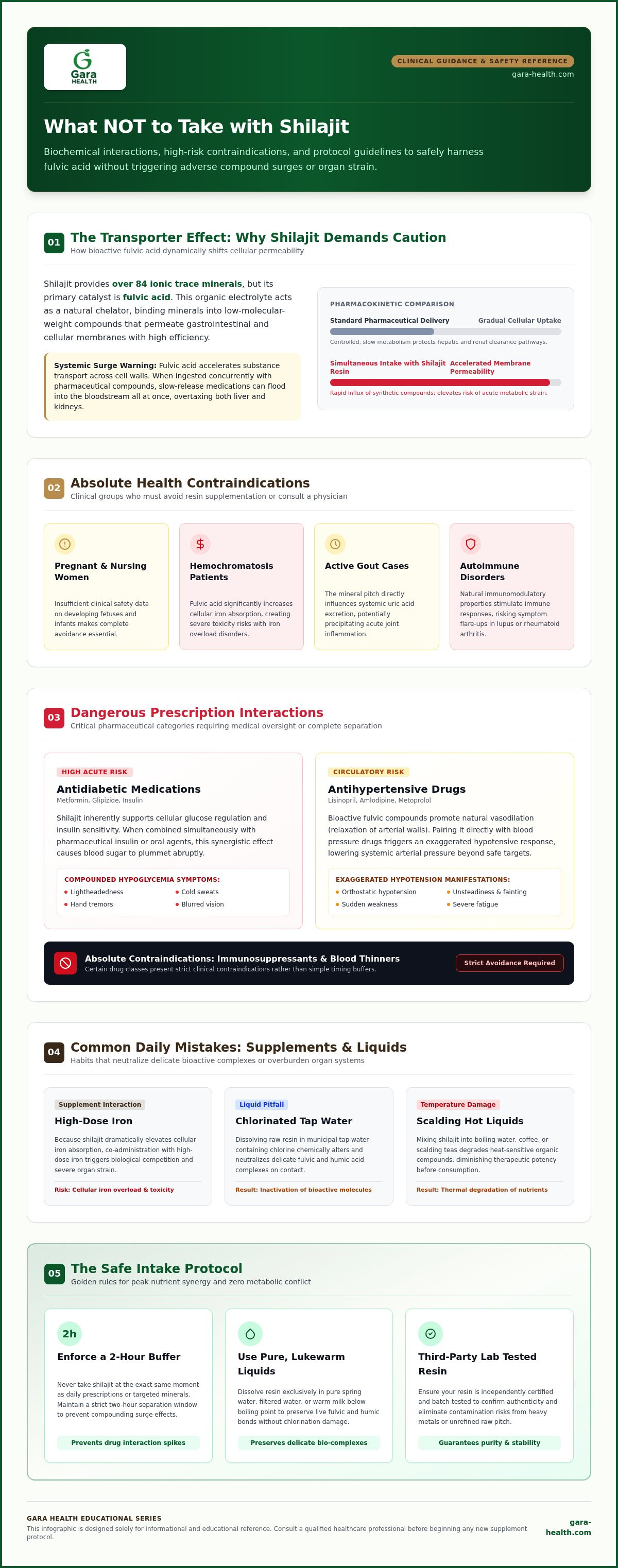
At a molecular level, fulvic acid binds to minerals through natural chelation, transforming them into low-molecular-weight, highly soluble compounds that slip effortlessly across cell walls. This accelerated uptake brings significant risks when combined simultaneously with synthetic drugs. A medication designed for slow, sustained release can surge into your bloodstream all at once. That sudden spike taxes your liver and kidneys. Mastering what not to take with shilajit ensures you harness this enhanced cellular uptake intentionally, rather than triggering unpredictable pharmacokinetics.
Who Must Exercise Extreme Caution Before Starting Shilajit
Because purified resin acts as an active biological regulator, certain individuals need to hold off or consult a medical provider before adding it to their morning routine:
- Pregnant and nursing women: Clinical safety data remains insufficient regarding developing fetuses and nursing infants, making complete avoidance the safest choice.
- Individuals with hemochromatosis: Shilajit's fulvic complex dramatically elevates cellular iron absorption, creating severe toxicity risks for anyone managing iron overload disorders.
- Those managing active gout: The mineral pitch can influence systemic uric acid excretion, which may trigger painful inflammatory episodes in sensitive joints.
- People with autoimmune conditions: Its natural immunomodulatory properties stimulate immune responses, which can inadvertently provoke symptoms in conditions like lupus or rheumatoid arthritis.
Prescription Medications to Never Combine with Shilajit
Understanding what not to take with shilajit is vital if you manage daily prescription therapies. Because fulvic acid serves as the main active principle in authentic resin, the compound doesn't behave like an inert multivitamin. It exerts distinct physiological effects on enzyme systems, vascular tone, and glucose metabolism. Swallowing resin alongside certain pharmaceuticals can amplify a drug's potency to dangerous levels or blunt its therapeutic impact altogether.
Antidiabetic Drugs and the Danger of Compounded Hypoglycemia
Shilajit exerts natural glucose-regulating effects by supporting cellular energy production and insulin sensitivity. When combined simultaneously with pharmaceutical insulin, metformin, or glipizide, this dual action can drop circulating blood sugar too rapidly. You might experience acute hypoglycemia, marked by sudden lightheadedness, cold sweats, hand tremors, and blurred vision. Anyone managing blood sugar who explores resin needs physician oversight and strict daily glucose monitoring.
Blood Pressure Medications and Hypotensive Episodes
Bioactive resin compounds promote natural vasodilation, encouraging blood vessels to relax. While this supports general cardiovascular vitality, taking it alongside antihypertensive drugs like lisinopril, amlodipine, or metoprolol can create an exaggerated hypotensive response. This sudden drop in systemic pressure often manifests as orthostatic hypotension, leaving you unsteady, fatigued, or vulnerable to fainting when standing up.
Immunosuppressants and Blood-Thinning Prescriptions
Some drug categories represent absolute clinical contraindications rather than simple timing adjustments:
- Immunosuppressive therapies: Shilajit acts as an immunomodulator, naturally stimulating defense cells. This directly counteracts medications like tacrolimus, cyclosporine, or prednisone, which work to calm immune activity following organ transplants or during autoimmune crises.
- Anticoagulants and antiplatelet drugs: Because resin possesses mild blood-thinning properties, pairing it with warfarin, clopidogrel, or daily aspirin elevates your risk of unexplained bruising, nosebleeds, and gastrointestinal bleeding.
Always talk to your prescribing doctor before introducing potent botanicals into your schedule. Once cleared, choosing clean, lab-verified formulas from Gara Health ensures you optimize your daily routine with pure, unadulterated botanical power.
Supplements and Minerals to Avoid Mixing Directly with Shilajit
Building an intentional wellness routine often means auditing your supplement cabinet. Because resin acts as a potent metabolic driver, sorting out what not to take with shilajit directly applies to daily vitamins and fitness formulas. In most cases, you don't need to eliminate these nutrients permanently. Instead, strategic separation protects your system from biological competition, organ overload, and digestive fatigue.
High-Dose Iron Supplements and Iron Overload Risks
Pure Himalayan resin naturally supplies bioavailable ionic iron alongside dozens of trace elements. Because fulvic acid dramatically accelerates cellular mineral absorption, swallowing high-dose synthetic iron pills alongside your resin is dangerous. This combination can flood your tissues with excess free iron, sparking oxidative stress, gastrointestinal cramping, and long-term liver burden. If you regularly consume iron supplements, ask your physician to evaluate your serum ferritin levels before introducing shilajit.
Excessive Central Nervous System Stimulants and Synthetic Energy Boosters
Resin invigorates cellular vitality by supporting mitochondrial ATP production. When you stack that sustained, natural stamina on top of extreme synthetic pre-workouts, ephedra, or massive caffeine doses, your nervous system can redline. This collision frequently triggers racing heart palpitations, restless anxiety, and eventual adrenal exhaustion. Rather than shocking your adrenals with synthetic stimulants, pairing your morning ritual with a balanced shilajit infused coffee powder delivers smooth, clean cognitive focus without the jittery crash.
High-Dose Diuretics and Uric Acid Alterations
Resin gently encourages natural kidney filtration and fluid balance. However, knowing what not to take with shilajit extends to aggressive natural diuretics like concentrated dandelion root extract and prescription water pills. Taking them concurrently accelerates fluid depletion, stripping vital sodium and potassium from your circulation. This leaves you feeling fatigued, dehydrated, and prone to muscle cramps. Furthermore, resin alters how your kidneys process and excrete uric acid, making immediate co-ingestion with specialized gout supplements counterproductive.
Daily Liquids and Foods That Ruin Shilajit's Efficacy
Even if you select the highest grade resin, improper preparation can quietly destroy its active benefits before it ever reaches your cells. Understanding what not to take with shilajit includes re-evaluating the ordinary liquids sitting on your kitchen counter. Fulvic and humic acids are delicate organic compounds. When exposed to harsh chemical disinfectants or extreme temperatures, their bioactive matrix destabilizes rapidly.
Tap Water and Chlorinated Fluids: The Free Radical Hazard
Turning on the kitchen faucet is the most common preparation mistake. Municipal tap water contains chlorine and chloramines added for city-wide disinfection. When dissolved into chlorinated tap water, fulvic acid readily binds to these free halogens, sparking chemical reactions that generate harmful chlorination byproducts. This unwanted reaction neutralizes the resin's natural antioxidant capacity. Dissolve your resin exclusively in pure spring water, filtered reverse-osmosis water, or warm herbal infusions.
Alcohol and Heavy Metabolic Depressants
Alcohol acts as a direct physiological antagonist to bioactive resin. While shilajit revitalizes cellular oxygenation and supports liver energy, alcohol burdens the hepatic pathways responsible for processing over 84 ionic trace minerals. Its depressant and dehydrating nature cancels out the sustained mental clarity adaptogens provide. To protect your body's natural equilibrium, separate resin consumption from alcoholic beverages by at least four to six hours.
Boiling Liquids and Heat Degradation of Active Compounds
Heat tolerance has strict physical boundaries. Dropping raw resin into rolling, boiling water fractures delicate micronutrient bonds and degrades active organic peptides. Knowing what not to take with shilajit also means knowing what liquid temperature to avoid. Keep your dissolution liquids warm rather than scorching, ideally staying below 120 degrees Fahrenheit. If a beverage is cool enough to sip comfortably without scalding your tongue, it will protect the active compounds.
Elevating your daily routine starts with intentional habits and clean sourcing. To experience authentic, unadulterated vitality straight from pristine elevations, shop Himalayan Shilajit Resin 30g from Gara Health and transform your morning ritual with confidence.
The Safe Shilajit Protocol: Proper Timing, Synergy, and Purity Standards
Mastering what not to take with shilajit empowers you to build an intentional, high-performance daily routine. Safe integration is never about restrictive guesswork; it centers on disciplined timing and clean sourcing. Follow this simple four-step blueprint to safeguard your vitality:
- Audit: Identify any prescription drugs, synthetic iron, or concentrated stimulants in your medicine cabinet.
- Isolate: Implement a strict separation window between your resin dose and all pharmaceuticals.
- Pair: Dissolve your purified resin in clean, non-chlorinated liquids alongside healthy fats or balancing adaptogens.
- Verify: Insist on third-party laboratory documentation to ensure your resin is free of elemental contaminants.
The 2-Hour Golden Rule: Scheduling Your Daily Doses
Take your shilajit first thing in the morning on an empty stomach to maximize cellular assimilation. Maintain an unbroken two-hour buffer before taking any necessary daily prescriptions or synthetic mineral supplements. This timing window protects delicate organ systems from sudden pharmacological surges while allowing fulvic acid to work unimpeded. If you are tracking your physical recovery or rebalancing your energy, explore our guide on the signs of low vitality to measure your daily progress.
Synergistic Stacking: Safe Natural Companions for Elevated Stamina
While isolating reactive pharmaceuticals is non-negotiable, pairing shilajit with the right organic allies creates remarkable synergy. Dissolving resin into warm coconut milk or grass-fed ghee enhances the delivery of lipid-soluble trace compounds. Stacking shilajit with adaptogens like ashwagandha or organic functional blends like mushroom coffee provides sustained physical stamina and grounded cognitive clarity without shocking your adrenal glands.
Choosing Pure Himalayan Resin Over Dangerous Raw Imitations
Knowing what not to take with shilajit must also include avoiding unpurified, raw marketplace pitches. Unprocessed shilajit harvested directly from rocks carries hazardous levels of heavy metals like lead and arsenic, alongside mold, mycotoxins, and microscopic dirt. Safe supplementation requires certified, lab-purified resin that adheres to strict international standards for heavy metal safety. Selecting verified products like authentic Himalayan Shilajit Resin 30g guarantees you receive pristine bioactive potency without risking toxic chemical exposure.
Reclaim Your Daily Vitality with Confident Supplementation
Transforming your daily wellness shouldn't involve anxious guesswork. Knowing what not to take with shilajit protects your system while unlocking the full spectrum of cellular rejuvenation. By respecting the two-hour pharmaceutical buffer, swapping chlorinated tap water for filtered spring water, and avoiding conflicting high-dose iron supplements, you create an optimal internal environment where natural adaptogens can truly thrive.
Revitalizing energy begins with uncompromising purity. Sourced directly from pristine high-altitude Himalayan mountain rock faces, our resin is rigorously purified and third-party laboratory tested for heavy metal safety. Packed with 84+ ionic minerals and high-potency fulvic acid compounds, authentic resin supports peak performance from your first morning sip. Ready to empower your wellness journey? Experience pure vitality with third-party tested Himalayan Shilajit Resin 30g and step into lasting stamina today.
Frequently Asked Questions
Can you take shilajit while on blood pressure medication?
No, you shouldn't combine shilajit with blood pressure drugs without explicit medical clearance. Shilajit naturally promotes cardiovascular vasodilation, helping blood vessels relax. When taken alongside pharmaceutical beta-blockers, ACE inhibitors, or calcium channel blockers, this natural mechanism can compound hypotensive effects. That interaction risks sudden blood pressure drops, postural lightheadedness, or fainting. Always consult your prescribing physician before introducing resin alongside cardiovascular prescriptions.
Is it safe to drink coffee with shilajit in the morning?
Yes, combining shilajit with moderate morning coffee is generally safe and revitalizing. The ionic minerals and fulvic acid help buffer caffeine's sharp edges, delivering clean focus without typical jitters. Functional blends like Gara Shilajit Coffee Powder make this routine effortless. Just don't mix pure resin directly into actively boiling liquid. Let your cup cool down slightly before stirring to keep heat-sensitive compounds completely intact.
What happens if you mix shilajit with ordinary tap water?
Mixing shilajit with chlorinated tap water degrades its bioactive nutrients and can generate unwanted chemical byproducts. Municipal systems treat tap water with chlorine and chloramines. When exposed to fulvic acid, chlorine readily reacts with organic compounds, neutralizing the resin's natural antioxidant capacity. This chemical clash is a prime example of what not to take with shilajit. Dissolve your resin exclusively into filtered, reverse-osmosis, or spring water.
How many hours should I wait between taking shilajit and my prescription medications?
You should maintain a minimum two-hour window between taking shilajit and any daily prescription medications. Because fulvic acid acts as a potent cellular transporter, it alters membrane permeability and can speed up medication absorption rates. A two-hour separation allows your gastrointestinal tract to process pharmaceuticals as intended. For narrow-therapeutic drugs like levothyroxine, extending that separation window to four hours provides maximum safety.
Can you take a daily multivitamin or iron pill with shilajit?
You should avoid pairing shilajit directly with high-dose iron supplements, though balanced standard multivitamins are fine with slight timing separation. Shilajit naturally supplies bioavailable ionic iron and accelerates cellular mineral uptake. Direct co-ingestion with synthetic iron pills can cause mineral competition, stomach upset, or dangerous systemic accumulation. When mapping out what not to take with shilajit, schedule your multivitamins at lunch and your resin at breakfast.
Why is unpurified or raw shilajit considered dangerous to ingest?
Raw, unprocessed shilajit is hazardous because it contains toxic heavy metals, fungal mold, and environmental debris from high-altitude rock faces. Authentic resin requires thorough extraction and modern purification to eliminate arsenic, lead, and mycotoxins while preserving delicate fulvic complexes. Never consume cheap, unverified marketplace rocks or unpurified raw powders. Always choose premium, third-party lab-tested products that verify safety and purity standards before use.


