


What if the most credible functional coffee benefits come from the coffee itself, not the headline ingredient on the pouch? Coffee can provide a familiar caffeine lift, while added mushrooms, herbs, or other ingredients bring separate claims and a different level of evidence.
If you’ve found conflicting promises about sharper focus, smoother energy, or better wellness, you’re not alone. “Functional coffee” has no official definition, and a product label alone can’t tell you whether an ingredient is present in a meaningful amount or likely to suit your routine.
This guide separates what research suggests about coffee from what’s known about common add-ins. You’ll learn how evidence varies by ingredient, what to check on labels, and how caffeine content, serving directions, and safety considerations can shape your choice. The goal isn’t to dismiss functional blends or promise a transformation. It’s to help you weigh the claims and choose thoughtfully.
Key Takeaways
- Functional coffee combines coffee with added ingredients, but there’s no standard formula. Check each product’s label.
- Assess functional coffee benefits by separating familiar caffeine effects from claims tied to specific ingredients.
- Added ingredients don’t automatically make a blend healthier. Consider the evidence, taste, caffeine, and your preferences.
- Before choosing a blend, review its ingredient list, caffeine information, and serving directions.
- Compare the current labels for Gara Shilajit Coffee Powder and Gara Health Mushroom Coffee with what you’re looking for in your routine.
What Is Functional Coffee vs. Regular Coffee?
Functional coffee is brewed or instant coffee marketed with added ingredients intended to serve a purpose beyond the coffee itself. There’s no standard formula, so one blend can differ substantially from another. The broader idea relates to functional food, a category associated with foods promoted for benefits beyond basic nutrition. That label alone doesn’t prove a particular product works as claimed.
Separate the possible effects of each part of a blend. Coffee’s caffeine can support alertness, while claims about added ingredients depend on the ingredient, its amount, and the evidence behind it. A product name or wellness phrase won’t tell you those details. Check the ingredient list and serving information before drawing conclusions about its functional coffee benefits.
What ingredients can functional coffee contain?
Depending on the product, a functional blend may include adaptogens, shilajit, or functional mushrooms. These are broad ingredient categories, not promises of particular effects. Products differ in which ingredients they include and how much they contain. Look for named ingredients and clear amounts on the label. If the amounts are hidden in a proprietary blend, it may be difficult to assess how much of each ingredient you’re getting.
How does functional coffee differ from a regular cup?
Definition: Regular coffee is brewed or instant coffee without added ingredients marketed for a functional purpose. Its familiar effects are primarily associated with coffee and its caffeine.
Example: Functional coffee starts with a coffee base and includes additional ingredients promoted for a purpose beyond the usual coffee experience. The additions and their amounts vary by product.
That distinction doesn’t automatically make one choice better. Added ingredients may change the flavor, texture, or preparation, and caffeine content can vary with the product and serving. A blend may still provide caffeine from its coffee base. “Functional” doesn’t mean low-caffeine or caffeine-free.
- Regular coffee: A straightforward coffee experience. Caffeine and taste depend on the coffee and how it’s prepared.
- Functional coffee: Coffee with added ingredients. The formula, caffeine, flavor, and supporting evidence depend on the specific product.
Use the label as your guide, not the category name. Confirm which ingredients are present, whether their quantities are stated, and how much caffeine a serving contains when that information is available. These details give you a clearer basis for comparing blends and deciding whether the additions fit your preferences.
Which Functional Coffee Benefits Have the Most Credible Support?
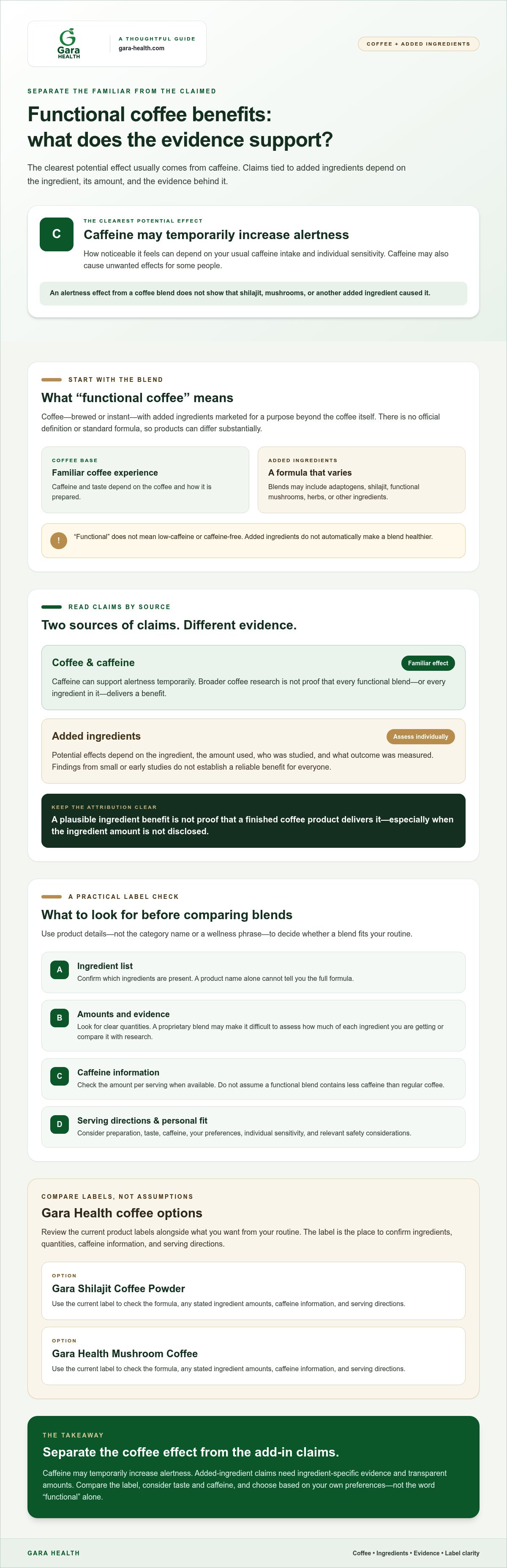
The clearest potential effect usually comes from caffeine, not from the “functional” label. Caffeine may temporarily increase alertness, while broader wellness claims depend on the added ingredients and the evidence for each one. A plausible benefit attributed to an ingredient doesn’t prove that a finished coffee product delivers it.
Sort claims by source. Caffeine’s familiar alertness effect is different from potential effects attributed to coffee compounds or added ingredients. Harvard T.H. Chan School of Public Health provides an overview of the health benefits of coffee, along with considerations such as caffeine and individual response. Broader coffee research shouldn’t be treated as evidence for every functional blend or every ingredient it contains.
Can functional coffee support energy and focus?
Caffeine can temporarily make you feel more alert. How noticeable that feels depends on factors such as your usual caffeine intake and individual sensitivity. It may also cause unwanted effects for some people. Check the product’s caffeine information and serving directions rather than assuming a functional blend has less caffeine than regular coffee.
Keep the attribution clear: if a coffee blend contains caffeine, that doesn’t show that shilajit, mushrooms, or another added ingredient caused the alertness. Nor does it establish sustained energy, improved performance, or freedom from jitters. Those broader product-specific claims require relevant evidence.
What can added ingredients contribute to a blend?
Assess research ingredient by ingredient. Consider what was studied, the amount used, who participated, and what outcome researchers measured. A finding from a small or early study may be interesting, but it doesn’t establish a reliable benefit for everyone or for a coffee containing an unspecified amount. If a blend doesn’t disclose ingredient quantities, it can be harder to compare its formula with the research.
For a deeper look at how adaptogens are discussed in coffee blends, read this adaptogenic coffee guide. Treat ingredient explanations as a starting point for evaluation, not a guarantee of a particular outcome.
A practical evidence check starts with three questions: Is the claim about caffeine, coffee, or an added ingredient? Does the research match the ingredient and amount in the product? Was the same outcome shown in people like you? The phrase functional coffee benefits can describe a product’s intended appeal, but it doesn’t replace those checks. You can also review Gara Health’s functional coffee options and consider what each current label discloses.
Functional Coffee vs. Regular Coffee: Are the Extra Benefits Worth Believing?
Sometimes, but added ingredients don’t automatically make coffee healthier. The value depends on what’s in the blend, how much it contains, the evidence for the ingredient and claimed outcome, and whether it suits your preferences. Caffeine-related alertness is a different claim from an effect attributed to mushrooms, shilajit, or another addition.
A blend’s label can tell you what the maker includes, but it can’t establish that the finished product delivers every benefit suggested by its claims. Even research on an ingredient may not apply directly to a coffee blend if the amount, preparation, or population studied differs.
| What to compare | Regular coffee | Functional coffee |
|---|---|---|
| Ingredients | Coffee, with additions depending on how you serve it. | Coffee plus one or more added ingredients. Check the label for specifics. |
| Caffeine | Amount varies by coffee and serving. | Also varies. Added ingredients don’t mean the blend is low-caffeine or caffeine-free. |
| Evidence | Separate familiar caffeine effects from broader claims about coffee. | Look for evidence tied to each ingredient, amount, and claimed outcome. |
| Taste | Reflects the coffee and preparation. | Added ingredients may change flavor or texture. The result depends on the formula. |
| Personal fit | May suit people who prefer a simple cup. | May appeal if the ingredients, taste, caffeine, and label transparency suit your routine. |
Does functional coffee offer more than caffeine?
It can contain more than coffee and caffeine, but that doesn’t establish an extra effect. For example, research on a particular mushroom ingredient wouldn’t, by itself, prove that a finished mushroom coffee produces the same result. Be cautious with sweeping claims about immunity, “detoxification,” or disease outcomes unless they’re supported by appropriate evidence for the product and claim. The phrase functional coffee benefits isn’t a substitute for that evidence.
When might regular coffee be the better fit?
If you enjoy your usual coffee and don’t want added ingredients, there may be no reason to switch. Consider flavor, caffeine sensitivity, dietary preferences, and whether you can clearly see what a blend contains. For a product-focused discussion of mushroom blends, explore this mushroom coffee guide.
To compare options, browse Gara Health functional coffee options and review each current label against your preferences, rather than choosing by a benefit claim alone.
How to Choose and Use Functional Coffee Thoughtfully
A clear label is more useful than a long list of wellness buzzwords. Use this checklist to compare options and decide whether a blend fits your routine:
- Read the ingredients: Look for a complete list and check which ingredients are actually included.
- Check caffeine: Review disclosed caffeine information where available, and consider coffee and other caffeine sources you consume during the day.
- Review serving directions: Follow the current product label rather than assuming every blend uses the same amount or schedule.
- Assess personal fit: Consider taste, dietary preferences, caffeine sensitivity, and whether the ingredient details give you enough clarity.
What should you check on a functional coffee label?
Look for serving directions, caffeine information if provided, and clearly stated ingredient amounts. If an amount or product detail you need is missing, verify it with the manufacturer instead of guessing. A vague blend description or sweeping promise isn’t proof of a specific result. Treat it as a reason to seek more information before making a choice.
Compare labels side by side. Ingredient names may sound familiar, but the amount, form, and combination can differ between products. This matters when you’re weighing functional coffee benefits: a general claim doesn’t show whether a specific blend contains the ingredients or quantities used in relevant research.
How can you add a functional blend to your routine?
Start with the product’s current directions and consider how its caffeine fits with your other daily sources. If you’re trying something unfamiliar, avoid adding several new supplements or blends at once. Introducing one change at a time makes it easier to notice how you respond. Don’t assume a functional coffee is caffeine-free or suitable for your needs without checking its label.
If you’re pregnant, take medication, or manage a health condition, ask a qualified healthcare professional before using a supplement or functional blend. They can help you consider whether its ingredients are appropriate for your circumstances.
Exploring shilajit coffee? This shilajit coffee overview offers a focused starting point. Check the current product label for its ingredients, caffeine details, and preparation directions before deciding if it suits your routine.
To compare available options, review Gara Health’s functional coffee options and use the product labels to guide your decision.
Explore Gara Health Functional Coffee Options with Clear Expectations
Once you know what to look for in a functional blend, compare the product information with your preferences. Gara Health offers Gara Shilajit Coffee Powder and Gara Health Mushroom Coffee. Their names identify the product categories, but they aren’t a substitute for reviewing the current label or evidence for any claimed effect.
Which Gara Health coffee products can readers explore?
Both are options to explore if you’re curious about coffee blends featuring shilajit or mushrooms. This section doesn’t rank them or assume they share the same formula, caffeine content, taste, or preparation directions. Those details should come from each product’s current information, not from its category name.
Before deciding, consider what matters most in your routine. You may prioritize disclosed caffeine information, a particular ingredient, preparation preferences, or a clear ingredient list. The best fit is the option whose verified details align with your expectations, not necessarily the one with the broadest benefit language.
What should readers verify before choosing a blend?
Product information can change, so review the current product page and label before using either coffee. Check:
- Ingredients: Confirm the full list rather than inferring a formula from the product name.
- Caffeine: Look for disclosed caffeine details and consider how the serving fits alongside your other sources.
- Serving and preparation: Follow the directions provided for that product instead of applying a universal serving or schedule.
- Claims: Match any stated benefit to the specific ingredients and available evidence. Don’t treat an intended benefit as a guaranteed outcome.
These checks help turn interest in functional coffee benefits into a practical choice. If an important detail isn’t clear, seek clarification rather than relying on assumptions. Your taste, caffeine preferences, and comfort with the available evidence all matter.
For a simple next step, explore Gara Health and review the current information for Gara Shilajit Coffee Powder and Gara Health Mushroom Coffee. Compare what each label states and choose only if the details feel right for your routine.
Make Your Next Coffee Choice With Confidence
The clearest functional coffee benefits often start with understanding what comes from caffeine and what depends on added ingredients. Research on an ingredient alone doesn’t prove a finished blend will deliver the same result. Compare labels, caffeine information, and serving directions, then decide whether the taste and ingredients suit your routine.
Gara Health offers Gara Shilajit Coffee Powder and Gara Health Mushroom Coffee. Their names can help you narrow your search, but check each product’s current information for ingredients, caffeine, and preparation details rather than assuming what the formula contains or what it will do.
Ready to compare products? Explore Gara Health coffee options and review the current product details at your own pace. A thoughtful choice doesn’t need bold promises, just clear information and a good fit for your everyday routine.
Frequently Asked Questions
What is functional coffee?
Functional coffee is brewed or instant coffee marketed with added ingredients intended to serve a purpose beyond the coffee itself. Depending on the product, those additions may include mushrooms, shilajit, or adaptogens, but there’s no standard formula. Check the ingredient list and serving information rather than assuming every blend contains the same ingredients or amounts. The term describes a product category, not proof of a particular effect.
Does functional coffee have proven benefits?
Some potential effects are better understood than others. Caffeine may temporarily increase alertness, while claims tied to added ingredients require evidence for the specific ingredient, amount, and outcome. Research on an ingredient alone doesn’t prove a finished coffee blend delivers the same effect. To evaluate functional coffee benefits, look beyond broad marketing language and check what the product contains and whether relevant evidence supports its claims.
Can functional coffee improve focus?
Caffeine may temporarily increase alertness, which can feel like improved focus for some people. Responses vary with individual sensitivity and usual caffeine intake. If a blend contains mushrooms, shilajit, or other additions, don’t assume those ingredients are responsible for caffeine’s familiar effects. Check the label for caffeine information and consider how the serving fits your routine. A broad focus claim doesn’t guarantee that you’ll notice an effect.
Is functional coffee healthier than regular coffee?
Not automatically. Adding ingredients doesn’t by itself make coffee healthier, and a product’s benefit claims don’t establish that it’s a better choice for you. Compare the ingredient list, disclosed amounts, caffeine information, and serving directions with your preferences. Regular coffee may suit you if you enjoy a simple cup, while a functional blend may appeal if its ingredients and evidence meet your expectations.
Can I drink functional coffee every day?
That depends on the product, your total caffeine intake, and your individual circumstances. Follow the product’s current serving directions and account for caffeine from other drinks or foods in your routine. If you’re pregnant, take medication, or manage a health condition, ask a qualified healthcare professional before using a functional blend. Don’t assume daily use is suitable simply because a product is sold as coffee.
Does functional coffee contain caffeine?
Often, but the amount varies by product and serving. Since many blends use coffee as their base, they may contain caffeine. The word “functional” doesn’t mean low-caffeine or caffeine-free. Check the product label for disclosed caffeine information, and contact the manufacturer if you need a detail that isn’t provided. If you’re monitoring your intake, include the blend alongside your other caffeine sources rather than considering it separately.


