


More supplements aren’t always the best first step when your mind feels cloudy. If concentration slips or the right words seem just out of reach, it’s understandable to look for supplements for brain fog. But brain fog describes symptoms, not a diagnosis. Sleep, stress, medication, or an underlying health issue may be more relevant than a missing supplement.
Online claims can make it difficult to distinguish a promising ingredient from polished marketing. A more useful question is whether a supplement addresses an identified need, rather than promising a universal clarity fix.
In this guide, you’ll learn when supplements may have a reasonable role, why checking for a deficiency may make more sense than guessing, and how to compare products more carefully. You’ll also find practical ways to track symptoms, prepare for a healthcare conversation, and decide when persistent or concerning symptoms deserve medical advice.
Key Takeaways
- Consider supplements for brain fog when they address a specific, identified need, not as a one-size-fits-all stack.
- Learn why checking for a vitamin B12, iron, or vitamin D deficiency may be more useful than supplementing without a clear reason.
- Compare product claims with their evidence limits, and prepare questions to discuss with a healthcare professional.
- Track when symptoms occur alongside sleep, stress, meals, and daily routines to make conversations about next steps more useful.
- Explore wellness products thoughtfully. Check current labels and treat products as optional choices, not answers to unexplained symptoms.
What Brain Fog Can Mean and Why Supplements Are Not a Diagnosis
Brain fog can make familiar tasks feel unexpectedly effortful. You might lose your place while reading, struggle to focus in a meeting, or feel slower to organize your thoughts. The phrase describes a cluster of cognitive symptoms, not a formal medical diagnosis. Put simply, brain fog is a person’s description of difficulty thinking clearly, concentrating, or remembering.
There isn’t one cause or one standard experience. Poor sleep, stress, illness, medication effects, and nutritional deficiencies are among the possible contributors, along with other health factors. A missed word by itself can’t identify the cause or show that you need a particular nutrient. For a broader discussion of related features and causes, see What Brain Fog Can Mean.
That’s why supplements for brain fog shouldn’t be treated as a diagnosis or universal fix. A supplement may be relevant if an underlying need is identified, but taking one without understanding what’s behind the symptoms can distract from a more useful next step: looking at the whole picture.
What does brain fog feel like?
It might mean rereading the same sentence because your attention keeps drifting, forgetting why you walked into a room, or pausing over a familiar person’s name. Experiences vary in duration, intensity, and impact. Notice what has changed for you, but don’t use one symptom to conclude that you have a deficiency or a specific condition.
When should brain fog prompt a medical conversation?
Consider contacting a healthcare professional if symptoms persist, worsen, interfere with daily activities, or begin unexpectedly. Note when they started, how they affect your routine, and any other changes you’ve noticed. This context can help guide a conversation about possible causes and appropriate next steps.
Act promptly for sudden confusion or severe symptoms. Seek urgent professional care rather than trying to manage them with supplements. If you think a prescribed medication could be contributing, talk with the prescriber. Don’t stop or change it on your own. Supplements are not a substitute for assessment or timely care.
Which Supplements for Brain Fog Have a Plausible Role?
The most evidence-aware approach is targeted, not a universal supplement stack. Vitamin B12, iron, or vitamin D may be relevant if a clinician identifies a deficiency or another reason to address levels. That doesn’t mean these nutrients are proven treatments for brain fog in everyone. Evidence supporting correction of a confirmed deficiency is different from evidence that supplementation improves cognitive symptoms in people who aren’t deficient.
When might vitamin B12, iron, or vitamin D be relevant?
A healthcare professional can consider your symptoms alongside your diet, health history, medications, and other factors before deciding whether testing is appropriate. Possible deficiency risks differ, as do the tests used to investigate them. Fatigue or trouble concentrating alone can’t tell you which nutrient, if any, is low. Avoid self-diagnosing or starting high-dose supplements based on symptoms. Ask a qualified professional what evaluation and next steps fit your circumstances.
Iron deserves particular caution: taking it without a demonstrated need may be inappropriate. The same principle applies to B12 and vitamin D. A test result needs to be interpreted in context, and the right plan depends on the person, not just a product label.
What should readers know about omega-3 and other popular options?
Omega-3 fats, including DHA and EPA, are studied for their roles in health, but that general research interest doesn’t establish fish oil as a treatment for brain fog. Evidence for a specific symptom in a specific population matters more than broad claims about “brain health.” Harvard Health Publishing advises readers to compare brain fog supplements carefully rather than assuming popular brain-health products are effective.
Products marketed for focus or mental clarity may combine ingredients, but a wellness claim isn’t proof that a product resolves unexplained cognitive symptoms. Shilajit, mushroom coffee, and other wellness products shouldn’t be treated as brain fog treatments. If you’re considering one as part of your routine, check its current label and discuss possible interactions or suitability with a healthcare professional, especially if you take medication or have a health condition.
Gara Health offers natural wellness products, including Himalayan Shilajit Resin 30g, Gara Shilajit Coffee Powder, and Gara Health Mushroom Coffee. These are optional wellness choices, not substitutes for identifying a deficiency or seeking care for persistent symptoms.
How to Compare Brain Fog Supplements Without Falling for Overclaims
Start by clarifying why you’re considering a product. Targeted supplementation may make sense when a clinician identifies a specific need. A promise of instant mental clarity doesn’t show that a product addresses the cause of your symptoms. More ingredients or higher potency don’t automatically mean better results. They can make it harder to judge what’s helping and may increase the chance of unwanted effects.
“Natural” describes a product’s positioning, not proof of effectiveness or freedom from risk. Use the label and evidence behind each claim to guide your questions, not as a substitute for personal medical advice.
| Proposed use | Evidence limits | Questions to ask a clinician |
|---|---|---|
| Addressing a confirmed nutrient deficiency | Correcting a documented deficiency is different from expecting the same supplement to improve focus in someone without that deficiency. | Do my symptoms or history suggest testing? What does a result mean for me? |
| Taking omega-3 for general brain health | Research interest in an ingredient doesn’t establish it as a treatment for brain fog specifically. | Is there a reason this may be suitable for my health needs or current medications? |
| Trying a multi-ingredient “clarity” blend | Broad claims or a long ingredient list don’t establish that the product resolves symptoms or show which ingredient could have an effect. | Can you review the full label for interactions, suitability, and a clear rationale for use? |
How can you judge whether a supplement claim is credible?
Check whether the label clearly identifies the ingredients and their amounts, and whether the claims stay within what evidence for those ingredients can support. Be cautious of guaranteed results, promises to treat a disease, or dramatic before-and-after stories presented as proof. If a company mentions independent quality testing, look for details about who performed it, what was tested, and whether the documentation applies to the product you’re considering. Don’t assume a seal or testing claim is meaningful without verifying its scope.
Why can a supplement affect people differently?
People differ in health status, diet, medications, and the underlying reason for their symptoms. An ingredient that suits one person may be ineffective or unsuitable for another, and supplements can interact with medicines or matter for certain health conditions. Before starting a product, discuss its intended use with a clinician or pharmacist, especially if you’re pregnant, receiving ongoing treatment, or taking prescription medication. This can help you weigh potential benefits against personal risks.
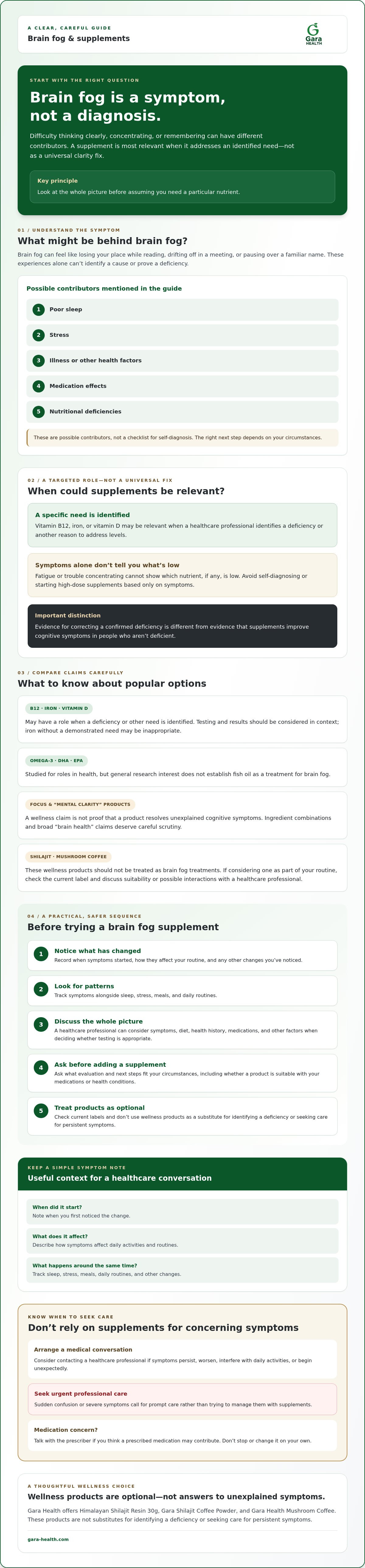
A Safer Step-by-Step Plan Before Trying a Brain Fog Supplement
A little preparation can make your next step clearer than adding a supplement at random. Use this process to organize what you’re noticing, check for relevant safety concerns, and discuss options with a qualified professional.
- Track the pattern. Note when symptoms began, how often they happen, and whether they’re getting better, worse, or staying the same. Record when they’re most noticeable and how they affect everyday tasks.
- Review your routine and health changes. Jot down sleep, stress, meals, hydration, recent illness, and any changes in your health or diet. Include prescription and over-the-counter medications, as well as supplements you already take. Don’t change prescribed treatment on your own.
- Seek an evaluation when needed. Bring your notes to a healthcare professional, especially if symptoms persist, worsen, or interfere with daily life. Ask whether an underlying cause or nutrient deficiency should be evaluated.
- Discuss options before starting. If you’re considering supplements for brain fog, show the clinician or pharmacist the product’s full label and explain what you hope it will do. Ask about interactions, whether it’s suitable for you, and what changes or unwanted effects to watch for.
What information should you bring to a healthcare professional?
A concise record is enough to start. Include when symptoms began, how often they occur, when they tend to appear, and specific effects on work, household tasks, or conversations. Bring your medication and supplement list, along with relevant changes in diet, sleep, stress, or health. You can also ask directly: “Should we look for an underlying cause or check for a nutrient deficiency before I try anything?”
How should you approach a supplement trial safely?
Get professional guidance before starting, particularly if you’re pregnant, have a health condition, or receive ongoing treatment. Avoid introducing several new products at once. Changing one thing at a time makes it easier to notice possible benefits or unwanted effects. Follow professional advice and product labeling, and check back with a clinician or pharmacist if symptoms worsen or new effects appear.
Sleep, nourishing meals, and manageable stress can support overall well-being, but lifestyle steps shouldn’t replace evaluation or treatment when symptoms call for care. A steady routine and a thoughtful product choice can go together, with neither treated as a shortcut to a diagnosis. If you’re exploring optional wellness products, browse Gara Health’s wellness offerings and review current labels before deciding whether a product fits your routine.
How to Make a Thoughtful Wellness Choice with Gara Health
A wellness product can be part of a considered routine, but it shouldn’t become a shortcut around understanding persistent or unexplained cognitive symptoms. Supplements for brain fog aren’t a substitute for identifying a possible cause, getting appropriate care, or following a clinician’s advice. If concentration or memory concerns continue or interfere with daily life, speak with a healthcare professional before shopping for supplements.
Where can Gara Health products fit in a broader wellness routine?
Gara Shilajit Coffee Powder and Gara Health Mushroom Coffee are functional beverage options from Gara Health. They are not brain fog supplements or treatments, and the information here doesn’t establish that they improve cognitive symptoms. If you’re curious about either option, review its current label, ingredient list, and directions, then consider whether it fits your preferences and routine. Check product details directly rather than assuming an ingredient or benefit based on a product category.
For broader context about mushroom coffee, read a mushroom coffee guide. If you’re comparing beverage styles, an adaptogenic coffee guide may also help you frame questions about ingredients and product claims. These resources can inform your research, but they don’t replace individualized medical guidance.
What is a sensible next step for readers?
Start with the question behind the purchase: what are you hoping the product will do, and is that expectation supported by clear information? Look for transparent, current labeling and claims that don’t promise to diagnose, treat, or cure a health condition. If you take medication, have an ongoing health condition, are pregnant, or are unsure whether a product is appropriate, ask a clinician or pharmacist to review it before use.
Gara Health’s offerings include Himalayan Shilajit Resin 30g, Gara Shilajit Coffee Powder, and Gara Health Mushroom Coffee. Treat them as optional wellness choices, not solutions to unexplained symptoms. Discuss ongoing concerns with a healthcare professional first, then explore product details only if they fit your needs and professional advice.
Choose Your Next Step with Clarity
Brain fog is a signal to pay attention, not a diagnosis to treat with a supplement stack. Consider possible causes, including sleep, stress, medications, or health conditions, and seek professional guidance if symptoms persist or disrupt daily life.
For supplements for brain fog, keep one distinction in mind: correcting an identified deficiency is different from expecting a supplement to sharpen focus when no deficiency has been found. Review claims and labels carefully, and ask a clinician or pharmacist about suitability and possible interactions before trying something new.
Gara Health offers wellness products through its online storefront, including Himalayan Shilajit Resin 30g, Gara Shilajit Coffee Powder, and Gara Health Mushroom Coffee. These are optional wellness choices, not treatments for brain fog or substitutes for care. Check current product labels and consider whether an item fits your routine and professional guidance.
If you’re curious about these options, explore Gara Health’s wellness products and review the product details. For persistent or concerning symptoms, make a healthcare professional your next step.
Frequently Asked Questions
Is there a supplement that gets rid of brain fog?
No supplement is established as a universal fix for brain fog. The best next step depends on what’s causing the symptoms. A clinician may recommend addressing a confirmed nutrient deficiency or another underlying issue, but supplements for brain fog may not help if they don’t address a specific need. Seek professional advice if symptoms persist, worsen, begin suddenly, or disrupt daily activities.
Can vitamin B12 help with brain fog?
Vitamin B12 may be relevant if you have a deficiency, but that doesn’t mean it improves brain fog for everyone. Difficulty concentrating or remembering can have many possible causes. A qualified healthcare professional can consider your health history and decide whether testing or supplementation makes sense for you. Don’t try to diagnose a deficiency from symptoms alone or start high-dose B12 without professional guidance.
What vitamin deficiency can cause brain fog?
A healthcare professional may consider deficiencies such as vitamin B12, iron, or vitamin D among many possible contributors, depending on your symptoms and health history. Brain fog alone can’t show which nutrient, if any, is low. Testing and clinical context matter. Ask a clinician whether evaluation is appropriate before taking supplements, especially several at once, since an unnecessary product may not help and may not suit you.
Are natural supplements safe for brain fog?
Natural doesn’t automatically mean effective or risk-free. Supplements can cause side effects, interact with medications, or be unsuitable for certain health conditions. Check the product label and discuss the intended use with a clinician or pharmacist, particularly if you take medication, are pregnant, or have an ongoing condition. Don’t use a supplement as a reason to delay professional evaluation of persistent or concerning symptoms.
How do I know whether I need a supplement for brain fog?
You can’t reliably identify a nutrient deficiency from brain fog symptoms alone. Note when symptoms occur, how often they happen, and how they affect daily activities. Also record relevant changes in sleep, diet, medication, or health. A clinician can review this context and decide whether testing or another evaluation is appropriate. That can help you avoid products that are unnecessary or unsuitable for your needs.
When should I see a doctor about brain fog?
Make an appointment if brain fog persists, worsens, interferes with work or daily activities, or appears with other concerning symptoms. Sudden confusion or severe, rapidly changing symptoms may require urgent medical attention. A healthcare professional can help assess possible causes and discuss next steps. Don’t stop prescribed treatment or rely on supplements instead of seeking care, especially when symptoms are new or disruptive.


