


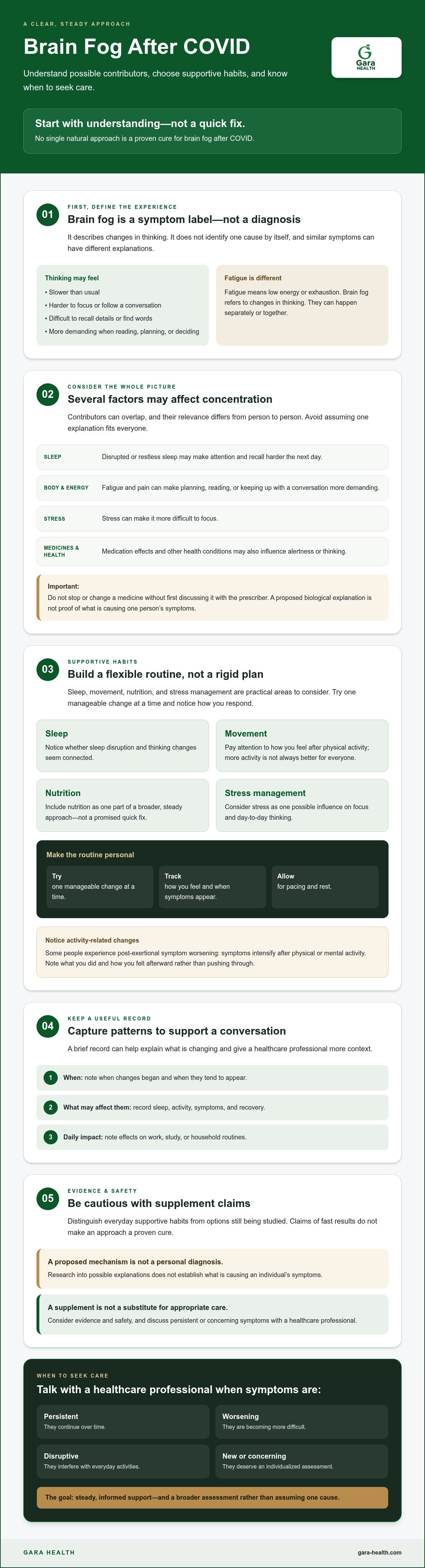
What if clearer thinking after COVID starts not with a supplement, but with understanding what may be driving the fog? Trouble concentrating, finding words, or remembering small details can make everyday tasks feel unusually demanding. It’s understandable to look for natural remedies for brain fog after covid, especially when claims promise fast results, but no single natural approach is a proven cure.
Brain fog describes symptoms such as slowed thinking and difficulty with memory or focus. These can occur during post-COVID recovery, but other health issues may also affect thinking. A healthcare professional can help explore possible causes, particularly if symptoms are worsening or disrupting daily life.
This guide covers practical supports, including sleep, movement, nutrition, and stress management, and explains what evidence can and can’t tell us about supplements. You’ll also find safety considerations and signs that it’s time to seek medical care. The goal is steady, informed support, not a quick fix or a replacement for appropriate care.
Key Takeaways
- Brain fog describes changes in thinking, not a diagnosis. Noting when symptoms occur can help guide a useful conversation with a healthcare professional.
- Several factors may contribute to concentration problems after COVID, so a broader assessment can be more helpful than assuming one cause.
- Explore natural remedies for brain fog after covid with evidence and safety in mind. Distinguish everyday supportive habits from options still being studied.
- Build a flexible routine by trying one manageable change at a time, tracking how you feel, and making room for pacing and rest.
- Learn how to assess wellness product claims and recognize when persistent, disruptive, new, or worsening symptoms deserve medical attention.
What does brain fog after COVID feel like, and why does it matter?
Brain fog is a descriptive term for changes in thinking, such as feeling mentally slowed, losing focus, or struggling to recall information. It isn’t a formal medical diagnosis, and it doesn’t point to one cause by itself. After COVID, these experiences may be part of a broader pattern of ongoing symptoms, but symptoms and recovery timelines differ from person to person.
Brain fog is a symptom label, not a medical diagnosis. That distinction matters: similar thinking changes can have different explanations. Treat them as a signal to notice and discuss rather than assume they’re all caused by COVID. The term cognitive dysfunction ("brain fog") is used in descriptions of Long COVID, but a clinician can help assess what may be contributing in an individual case.
Which thinking and memory changes do people call brain fog?
The experience can involve different mental skills. Attention may feel less steady, making it hard to follow a conversation or finish reading a page. Working memory, the ability to hold information in mind briefly, may falter when following several steps or keeping track of what you meant to do next. Some people notice pauses while searching for words; others find that reading, planning, or making decisions takes longer than usual.
Not everyone experiences the same mix or intensity of symptoms. Sleep disruption, stress, medications, and other health issues can also affect cognition, so context matters.
How is post-COVID brain fog different from ordinary tiredness?
Fatigue and cognitive symptoms can overlap, but they aren’t interchangeable. Fatigue is a sense of low energy or exhaustion; brain fog describes changes in thinking. You might feel tired without having trouble finding words, or notice concentration problems even when you don’t feel physically exhausted. They can also occur together.
The CDC uses the term Long COVID for ongoing health problems that can occur after SARS-CoV-2 infection. Symptoms vary and can affect daily life in different ways. A simple record can make the pattern easier to explain during a medical appointment. Note when changes began, when they tend to appear, what seems to affect them, and how they influence tasks such as work, study, or household routines. This context can help a healthcare professional consider possible contributors rather than assume a single cause.
Seeking natural remedies for brain fog after covid may feel like a practical next step, but first getting clear about the symptoms can help you choose supports more thoughtfully. If changes persist, worsen, or interfere with everyday activities, discuss them with a healthcare professional.
Why can concentration problems continue after COVID?
There may not be one explanation for lingering concentration problems. Sleep disruption, fatigue, pain, stress, medication effects, and other health conditions can all influence how clearly someone thinks. These factors may overlap with post-COVID symptoms, and their relevance differs from person to person. A clinician can help assess the full picture rather than assume one mechanism explains every case.
Persistent cognitive symptoms can have multiple possible contributors, and identifying them may take an individualized assessment. Research into post-COVID-19 brain fog discusses possible biological explanations, but a proposed mechanism isn’t proof of what’s causing one person’s symptoms. Inflammation, for example, shouldn’t be treated as a universal explanation or a reason to self-prescribe supplements.
What factors may affect thinking during post-COVID recovery?
Restless sleep can make attention and recall harder the next day. Pain or low energy may leave fewer mental resources for planning, reading, or keeping up with a conversation. Stress can also make it difficult to focus, while some medicines may affect alertness or thinking. Don’t stop or change a medication without first discussing it with the prescriber.
Some people experience post-exertional symptom worsening, meaning symptoms intensify after physical or mental activity. This can make a standard exercise plan unsuitable for everyone. Rather than pushing through or assuming more activity is always better, note what you did and how you felt afterward. A brief log of sleep, activity, symptoms, and recovery can help you and your clinician spot personal patterns.
When should a clinician look for other explanations?
Arrange an individualized assessment if cognitive changes are new, persist, worsen, or interfere with everyday life. Bring your symptom notes and discuss your health history, current medications, sleep, pain, mood, and any other changes. Depending on your situation, a clinician may consider whether further evaluation or testing is appropriate. The goal is to check for potential contributors, not to assume that every symptom is caused by COVID.
Seek urgent help for sudden confusion, severe difficulty breathing, or stroke-like symptoms such as sudden weakness, facial drooping, or trouble speaking. These symptoms need prompt assessment rather than self-care alone.
Once you’ve considered possible influences and safety, you can evaluate natural remedies for brain fog after covid more thoughtfully, with medical care as a partner rather than a substitute. If you’re browsing general wellness products, review Gara Health’s wellness products as consumer options, not as treatments for post-COVID symptoms.
Which natural remedies for brain fog after COVID have useful evidence?
A practical starting point is to separate everyday health supports from treatments tested specifically for post-COVID thinking problems. Sleep, balanced meals, hydration, and pacing can support overall well-being, but their benefits for an individual’s brain fog aren’t guaranteed. Supportive lifestyle steps may help you care for your health, but they are not established cures for Long COVID.
Which everyday habits may support cognitive well-being?
Keep the basics flexible and achievable. A steady sleep and wake schedule may support consistent rest. Regular meals with a range of nourishing foods and drinking to thirst can help meet general needs. Break demanding reading, screen time, or planning into manageable stretches, with pauses before your focus is depleted. These habits are supportive, not a promise that symptoms will resolve.
Match activity to what you can tolerate. Gentle movement may suit some people, but if physical or mental effort is followed by a symptom setback, don’t push through simply to meet a target. Adjust the pace and discuss recurring worsening with a healthcare professional. A short log can help you notice which routines feel manageable and which seem to precede harder days.
Do supplements or herbal remedies help post-COVID brain fog?
Evidence for supplements as treatments for post-COVID brain fog remains limited. Omega-3 fats support general brain health, but that doesn’t establish them as a treatment for this condition. Ginkgo biloba has been discussed in small case reports, while larger clinical research is still needed to determine whether it helps. Research interest in compounds such as curcumin and quercetin also shouldn’t be mistaken for proven benefit. NAC combined with guanfacine has been described in case reports, but guanfacine is a prescription medication, not a natural remedy, and this approach needs medical supervision.
Supplements can cause side effects, interact with medicines, or be unsuitable for some health conditions. Before trying one, ask a healthcare professional or pharmacist to review your medications, health history, and the product label. Be cautious of claims promising a fast fix or treatment for Long COVID. Gara Health products, including shilajit and mushroom coffee, should not be considered treatments for post-COVID brain fog; no product-specific evidence was provided to support that use.
A grounded approach to natural remedies for brain fog after covid prioritizes manageable habits, careful pacing, and a clear-eyed look at evidence. If symptoms persist or interfere with daily life, discuss them with a healthcare professional rather than relying on supplements alone.
How can you build a safe, realistic routine for clearer thinking?
A useful routine isn’t a strict productivity plan. It’s a way to notice what supports your day, make one manageable adjustment, and review how you respond. Keep expectations flexible: there’s no guaranteed timeline for improvement, and a change that feels helpful one week may need adjusting later.
How can symptom tracking help identify useful changes?
Try a brief daily note rather than a detailed log that becomes another demand. Record sleep quality, your main activities, concentration, and symptom intensity. You might also note a possible trigger or a change in medication or routine to discuss with your clinician. Keep the format simple:
- Sleep: How restful did it feel?
- Activities: What physical or mentally demanding tasks did you do?
- Symptoms: What changed, and how did it affect your day?
Where practical, adjust one routine factor at a time, such as taking a planned pause between demanding tasks. This can make patterns easier to interpret, though a diary can’t establish the cause of symptoms. Bring your notes to an appointment to help focus the conversation. If symptoms worsen, pause the change and seek clinical guidance rather than pushing ahead.
How can you pace cognitive tasks without giving up daily activities?
Break a demanding task into smaller parts. For example, handle one section of paperwork, then step away for a restorative pause before deciding whether to continue. Choose the essential tasks for the day and leave room to adapt. Rest is part of pacing, not a failure to meet a target.
Pay attention to how you feel during activity and afterward. If physical or mental effort repeatedly brings on a symptom setback, avoid increasing activity according to a rigid schedule. Post-exertional symptom worsening calls for an individualized approach, so discuss recurring patterns with a healthcare professional and ask what level of activity is appropriate for you.
Use your notes to make small, reversible adjustments, then review whether they seem manageable without expecting a particular result by a set date. The goal is a routine that supports daily life, not a test of willpower. If you’re also exploring consumer wellness products, browse Gara Health’s general wellness products; they aren’t established treatments for post-COVID brain fog.
When should you seek care, and how should you assess wellness products?
Make room for professional input, especially if thinking changes are new, persistent, worsening, or interfering with daily activities. A routine appointment can help you review possible contributors and decide what kind of support makes sense. Don’t wait for a supplement or lifestyle change to work before raising concerns.
What should you ask a healthcare professional about lingering brain fog?
Bring a short symptom record and ask which changes may need evaluation, whether medicines or other health conditions could play a role, and whether further assessment or a referral is appropriate. You can also discuss sleep concerns and what level of physical or mental activity is safe for you, particularly if effort seems to trigger symptom worsening.
Some symptoms need urgent attention, not a routine appointment. Seek emergency help for sudden severe confusion, new weakness or numbness, facial drooping, trouble speaking, severe difficulty breathing, or other sudden, serious symptoms. Follow current CDC and local emergency guidance if you’re unsure what to do.
How can you evaluate natural supplements without falling for cure claims?
Before trying a supplement, slow down and check the details. Bring the product label to a healthcare professional or pharmacist and ask whether its ingredients could interact with your medicines or be unsuitable given your health history. Consider asking:
- Does the label list every ingredient and amount clearly?
- Is there credible, independent information about product quality or testing, rather than only the seller’s claims?
- Could any ingredient affect a medication or health condition?
- What evidence supports the specific benefit being advertised?
Be wary of promises to cure Long COVID, restore focus, or deliver guaranteed results. A product’s popularity or a study of an ingredient for general wellness doesn’t establish that it treats post-COVID brain fog. The evidence for natural remedies for brain fog after covid varies, and supplements can carry risks even when marketed as natural. Don’t stop prescribed treatment or delay an evaluation to try one.
After discussing care and safety, you can explore wellness topics for general interest, not as treatment guidance. Read mushroom coffee guidance or natural vitality guidance with that distinction in mind. Your healthcare professional can help keep next steps grounded in your individual needs.
Take steady steps toward clearer days
Brain fog after COVID can have overlapping contributors, and no single approach works for everyone. The most grounded natural remedies for brain fog after covid are practical supports, such as pacing, restorative sleep, and manageable daily habits, while recognizing that these aren’t proven cures. Supplements also deserve careful scrutiny: check safety and evidence with a healthcare professional rather than trusting promises of a quick fix.
If symptoms are persistent, worsening, or disrupting daily life, seek medical guidance. Understanding your own pattern and getting the right evaluation can help you choose next steps with greater confidence.
For general wellness options, Gara Health offers physical supplements and functional beverages through its online store. Explore them as consumer products, not as treatments for post-COVID symptoms: Explore Gara Health’s wellness range.
Recovery can take patience. Small, informed steps and appropriate care can help you move forward at a pace that respects your needs.
Frequently Asked Questions
Can natural remedies cure brain fog after COVID?
No natural remedy has been established as a cure for brain fog after COVID. Sleep routines, balanced meals, pacing, and other supportive habits may help overall well-being, but they can’t guarantee that symptoms will go away. The evidence for natural remedies for brain fog after covid varies, especially for supplements. If symptoms persist or interfere with daily life, discuss them with a healthcare professional rather than relying on self-care alone.
What is the fastest natural way to clear brain fog after COVID?
There’s no proven natural method that reliably clears post-COVID brain fog quickly. If you notice a temporary dip in focus, a quiet break, water if you’re thirsty, or stepping away from a demanding task may feel helpful, but these aren’t treatments or guaranteed fixes. Longer-lasting symptoms deserve a broader look at possible contributors, such as sleep, medications, or other health issues, with guidance from a healthcare professional.
Can supplements help with brain fog after COVID?
It’s not yet clear that supplements can treat post-COVID brain fog. Some ingredients are being studied or have limited preliminary evidence, but interest in a supplement doesn’t prove it works for this condition. Supplements may also cause side effects or interact with medicines. Before trying one, show the full label to a healthcare professional or pharmacist and ask whether it’s appropriate for your health history and current medications.
How long does brain fog last after COVID?
There isn’t one recovery timeline. Thinking difficulties may ease, fluctuate, or persist, and the course can differ between people. Note when symptoms began, whether they’re changing, and how they affect daily activities. If brain fog continues, worsens, or disrupts work or home routines, arrange a medical assessment. A clinician can review possible contributors and discuss appropriate next steps instead of relying on a predicted recovery date.
Is exercise good for brain fog after COVID?
Activity may suit some people, but exercise isn’t appropriate at the same level for everyone during recovery. If physical or mental effort brings on a symptom setback, don’t push through a fixed workout plan. Adjust activity to what you can tolerate, include rest, and ask a healthcare professional for individualized advice, especially if symptoms repeatedly worsen after exertion. The aim is safe participation in daily life, not meeting a rigid target.
When should I see a doctor for brain fog after COVID?
Make an appointment if brain fog is new, persistent, worsening, or affecting everyday activities. Discuss when it started, your medicines, sleep, other symptoms, and whether further evaluation or a referral may help. Seek emergency care for sudden severe confusion, stroke-like symptoms such as facial drooping or trouble speaking, or severe difficulty breathing. These urgent symptoms need prompt attention rather than waiting for a routine appointment.
Can brain fog after COVID be caused by something other than Long COVID?
Yes. Sleep problems, stress, pain, medication effects, and other health conditions can affect concentration and memory, whether or not someone has Long COVID. These factors may also overlap with symptoms that began after COVID, so it’s best not to assume a single cause. A healthcare professional can review your history, symptoms, and medicines to help determine whether another explanation or additional assessment should be considered.


